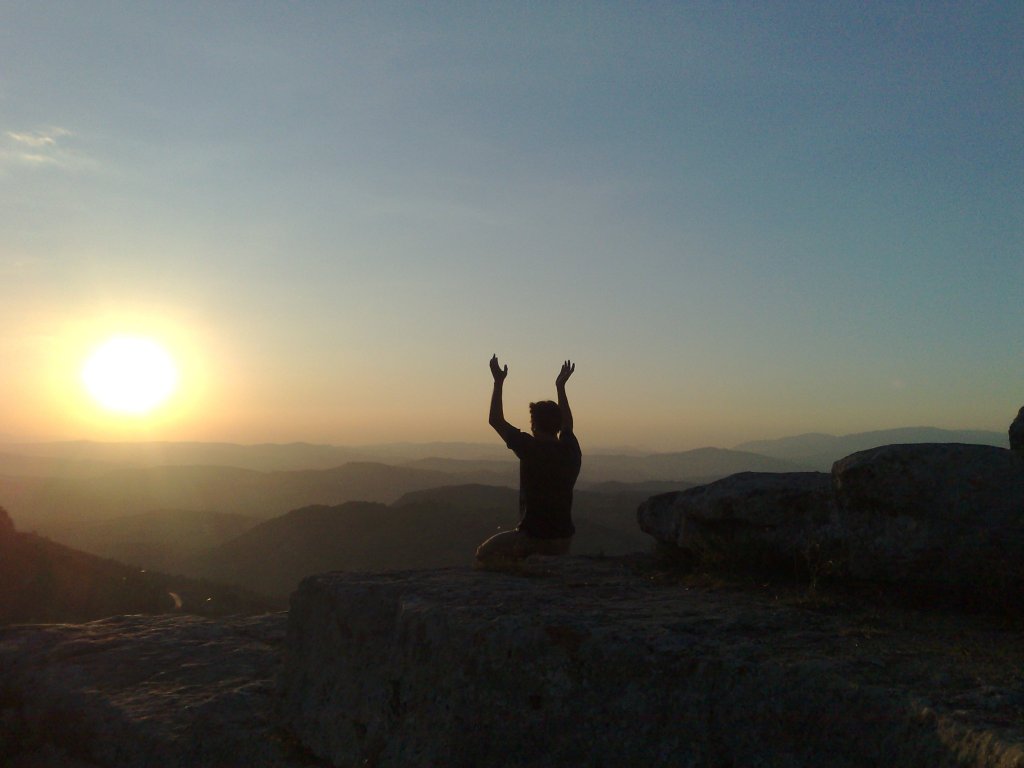
Thought for the day, Wednesday 27th April

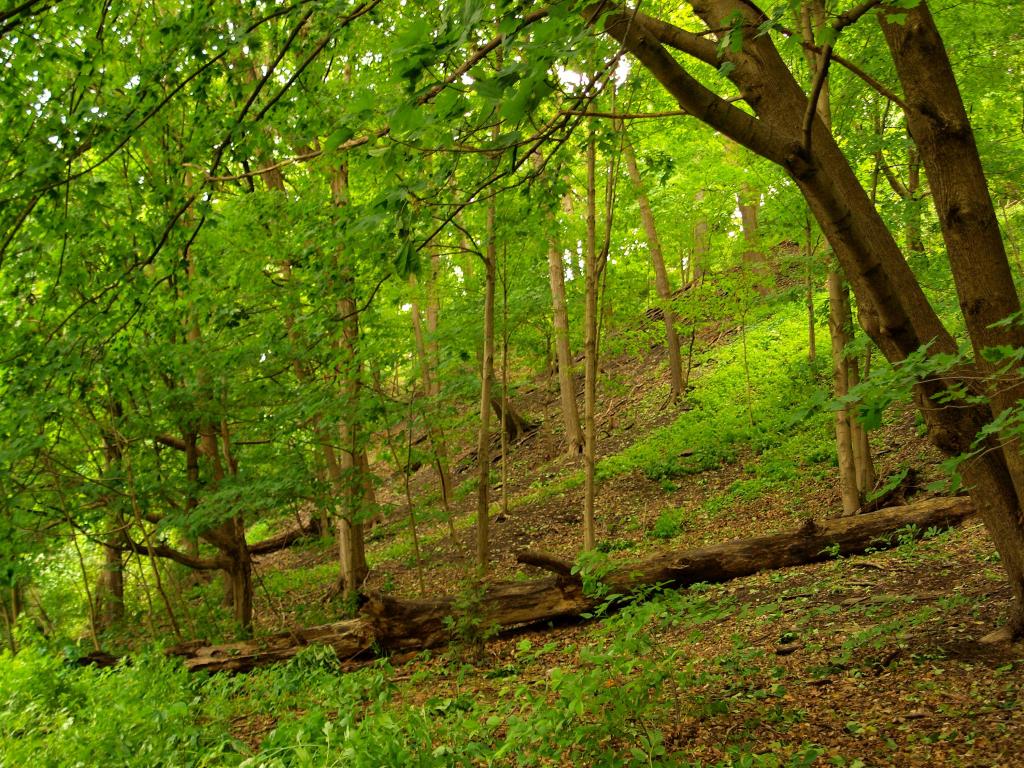
“In the woods a man casts off his years, as the snake his slough, and at whatever period of life, is always a child. In the woods, is perpetual youth. Within these plantations of God, a decorum and sanctity reign, a perennial festival is dressed, and the guest sees not how he should tire of them in a thousand years.

In the woods, we return to reason and faith. There I feel that nothing can befall me in life, — no disgrace, no calamity, which nature cannot repair. Standing on the bare ground, — my head bathed by the blithe air, and uplifted into infinite space, — all mean egotism vanishes. I become a transparent eye-ball; I am nothing; I see all; the currents of the Universal Being circulate through me; I am part or particle of God.”

Ralph Waldo Emerson, died on this day in 1882

Thought for the day, Sunday 24th April

From The Earth Path by Starhawk,

“May all the healers of the earth find their own healing. May they be fueled by passionate love for the earth.
May they know their fear but not be stopped by fear. May they feel their anger and yet not be ruled by rage. May they honor their grief but not be paralyzed by sorrow.
May they transform fear, rage, and grief into compassion and the inspiration to act in service of what they love.
May they find the help, the resources, the courage, the luck, the strength, the love, the health, the joy that they need to do the work.
May they be in the right place, at the right time, in the right way.
May they bring alive a great awakening, open a listening ear to hear the earth’s voice, transform imbalance to balance, hate and greed to love.
Blessed be the healers of the earth.”

Thought for the day, Friday 22nd April – Earth Day

Once, the Buddha was sitting in meditation, and someone came to him and asked: “Lord Buddha, you teach compassion, forgiveness, love and forbearance – from where did you learn all these wonderful qualities? Who is your teacher?”

Pointing towards the soil, the Buddha said: “I learned my forgiveness, compassion, friendship, kindness and all the wonderful qualities of love, beauty, unity and generosity from the Earth.”

V0018274 Bhaisajyaguru (the Medicine Buddha) and Padmasambhava (below Credit: Wellcome Library, London. Wellcome Images images@wellcome.ac.uk http://wellcomeimages.org The Medicine Buddha, Bhaishajyaguru, with his right hand in the earth-touching position. His left hand, in a meditation gesture, holds a lapis lazuli bowl containing three pieces of myrobalan fruit (a species of plum considered to have medicinal properties). To his right a miniature form of the deity, Green Tara, is depicted in a roundel. Below is Padmasambhava, who formally introduced Buddhism from India to Tibet. His two female consorts, Mandarava and Yeshe Tsogyal, flank him on either side. The Medicine Buddha sutras emphasise the value of visualising the Medicine Buddha and chanting the appropriate text, to promote the healing of body, speech and mind Gouache Late 18th century Published: – Copyrighted work available under Creative Commons Attribution only licence CC BY 4.0 http://creativecommons.org/licenses/by/4.0/

Thought for the day, Wednesday 20th April

From The Rose Garden by Saadi Shirazi, 13th Century CE, Persia,

“Someone asked a wise person, “Of the many celebrated trees that Allah has created, some are very lofty, some wonderfully shady or fruit-giving. But people call none of them azad or free, except for the cypress, which is none of these. Can you explain this mystery?”

That wise one replied, “Trees produce fruit or shade only during their appointed seasons. Sometimes they are fresh and blooming, other times dry and withered. The cypress isn’t exposed to either condition: it always flourishes. The azads, the spiritually independent ones, share the same quality. They don’t depend on the time or season for their freshness.”

Don’t set your heart on what passes away. The Tigris will continue to flow through Baghdad after the run of the Khalifs is extinct.

If your hand has plenty, be liberal and give freely like the date tree.

But you have nothing to give away, be an azad, a free person, like the cypress.”

Thought for the day, Tuesday 19th April

“When you drive your automobile in the Gobi desert, you can go everywhere. There is no one-way road.
So the nature of your mind pervades in all directions at once, evenly, as light or heat penetrates evenly.
The original nature of human beings is this even nature, but we are now in uneven nature, and our automobile must be driven on a one-way road. We cannot spread ourselves evenly in all directions like radio waves.
We must move in one long line, like a telegraph line.”

Sokei-an Sasaki (1882 – 1945), Japanese-American Zen Buddhist monk

Gobi Desert Panorama

Thought for the day, Monday 18th April

An Upside-Down Easter Meditation by Parker J Palmer,

“Years ago, I stumbled upon a little book by Julia Esquivel, the Guatemalan poet and social justice activist, titled “Threatened with Resurrection.” Those few words had a huge impact on me.

I’d been taught that death is the great threat and resurrection the great hope. But at the time I found Esquivel’s book, I was experiencing the death-in-life called depression. Her title jarred me into the hard realization that figurative forms of death sometimes feel comforting — while resurrection, or the hope of new life, feels threatening.

Why? Because death-in-life can bring us a perverse sense of relief. When I was depressed, nobody expected anything of me, nor did I expect anything of myself. I was exempt from life’s demands and risks. But if I were to find new life, who knows what daunting tasks I might be required to take on?

Sometimes we choose death-in-life (as in compulsive overactivity, unhealthy relationships, non-stop judgmentalism aimed at self or others, work that compromises our integrity, substance abuse, pervasive cynicism, etc.) because we’re afraid of the challenges that might come if we embraced resurrection-in-life.

Every religious tradition is rooted in mysteries I don’t pretend to understand, including claims about what happens after we die. But this I know for sure: as long as we’re alive, choosing resurrection is always worth the risk. I’m grateful for the people and experiences that continue to help me to embrace “the threat of resurrection.”

My Easter wish for everyone is the ability to say “YES!” to life. Even when life challenges us, it’s a gift beyond all measure.”