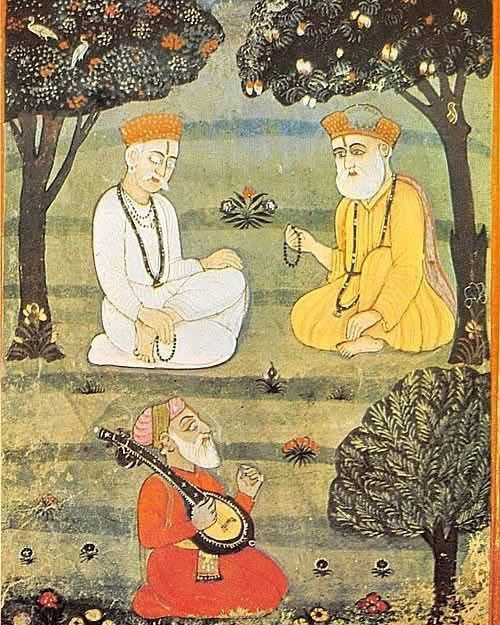
“That person who’s kind Who practices righteousness Who remains at peace In the world’s madness Who feels all sentient beings As his or her own self – This person attains The Deathless One And is accompanied always By the true God.”
Kabir, 15th century India, pictured (left) with Guru Nanak and Mardana
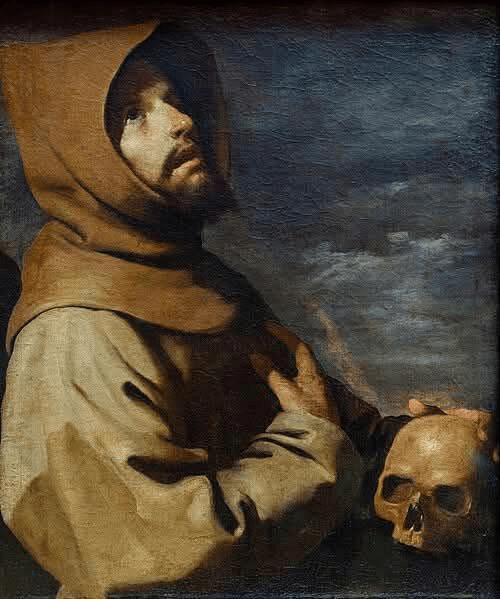
“Blessed saint francis pray for us now and in the time of despondency your brother the water is poisoned children no longer know your brother the fire the birds shun us
They belittle you popes and czars and the Americans buy up Assisi including you blessed saint francis why did you come among us?
In the stony outskirts of the city I saw you scurrying about a dog pawing through garbage even children choose a plastic car over you
Blessed saint francis what have you changed whom have you helped Blessed saint francis pray for us now and when the rivers run dry now and when our breath fails us.”
Dorothee Soelle (1929 – 2003), German liberation theologian, quoted in Christian Mystics by Matthew Fox
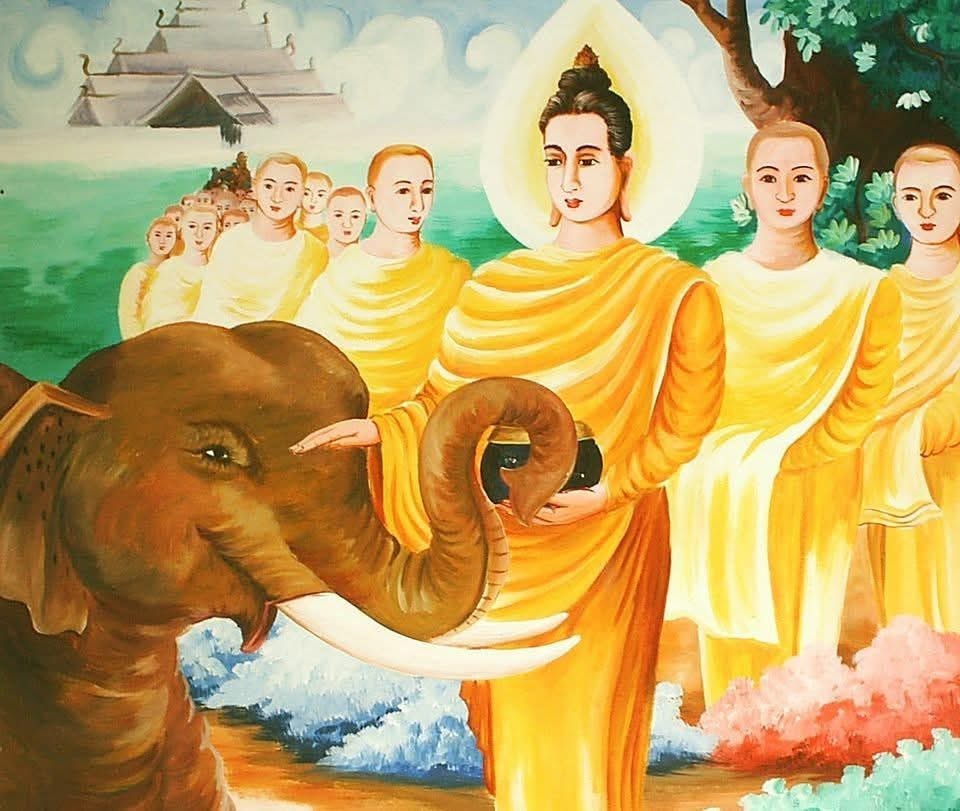
“May I be at peace. May my loved ones be at peace. May those I have never met be at peace. May those I have hurt, knowingly or unknowingly, be at peace. May those who have hurt me, knowingly or unknowingly, be at peace. May everybody be at peace.”
Buddhist Loving-Kindness Meditation (Metta Bhavana), quoted in Fragments of Holiness for Daily Reflection
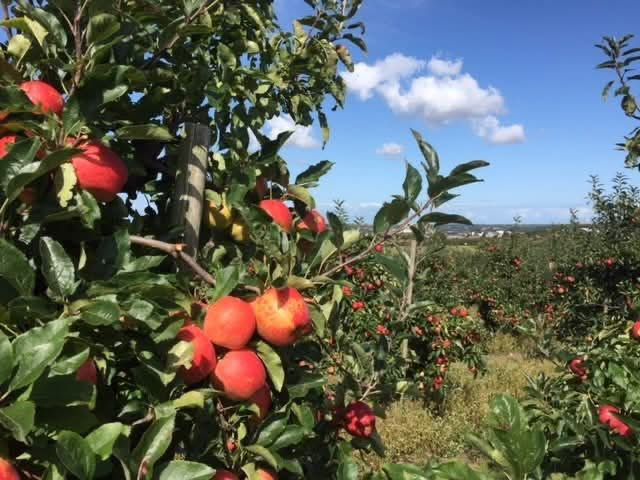
“As the summer draws to a close, its last days are filled with a special brilliance and abundance, unparalleled throughout the year. There is a mellow quality to the light, as the sun is lower upon the horizon. Life is now at its most abundant; the work of the spring and summer is coming to completion. The Autumn Equinox is a time of fruitfulness, with the turning leaves painting the forest in fiery tones, the smell of wood smoke upon the first cold winds and the scent of ripe apples in the orchards.
Now is the time to reap the rewards of our year and consider our own harvest. Have our activities produced the results we desired? Now we take stock, learn from our mistakes and preserve our resources for the winter ahead…
This is the time to draw inward once again to the comforts of the hearth and prepare for the dreaming season of winter ahead. On the wheel of the year, the Autumn Equinox, related to the element of water, is in the west, the position of old age, the setting sun and the gateway to the otherworld.”
“Hallelujah! Open your hearts, you servants of God Open your hearts to God Strive to be a fertile field for God’s love All day, all night, all ways. God’s work encompasses the nations, the world, the distances between the stars. God’s work is in the atom, the core, the intestacies of matter. God’s work is in the deeds of love, the justice of society, the care of friends. God’s life is in every life, making us one family. God’s justice lifts the poor setting them with nobility in the human community. God’s love fills our hearts with everything we need.”
“I’ve never tried to block out the memories of the past, even though some are painful. I don’t understand people who hide from their past. Everything you live through helps to make you the person you are now…
After all these years, I am still involved in the process of self-discovery. It’s better to explore life and make mistakes than to play it safe. Mistakes are part of the dues one pays for a full life.”
“An agnostic friend of mine eventually converted to the Catholic faith. She received religious instruction from a devout and simple-minded nun. They were discussing the story of the Annunciation, which presented some difficulties to my friend. At last she said to the nun, “Well, anyhow, I suppose that one is not obliged to believe that the Blessed Virgin was visited by a solid angel, dressed in a white robe?” To this the nun replied doubtfully, “No, dear, perhaps not. But still, you know, he would have to wear something.”
Now here, it seems to me, we have a great theological truth. The elusive contacts and subtle realities of the world of spirit have got to wear something, if we are to grasp them at all. Moreover, they must wear something which is easily recognised by the human eye and human heart – more, by the primitive, half-conscious folk-soul existing in each one of us, stirring in the depths and reaching out in its own way towards God.”
Evelyn Underhill (1875 – 1941), Anglo-Catholic writer on mysticism, quoted in Fragments of Holiness for Daily Reflection
“Give me a quiet life, give me trees, the wind through them, give me a sea and the song it sings. Give me heartbeats shared with those I love, give me peace and a long deep sleep.”
“O Fire of the Spirit, life of all life of all creatures, Holy are you, because you make all creatures come to life. Holy are you, because you save the dangerously broken. Holy are you, because you heal the wounds. O tremendous flow which has permeated everything in the heights and on earth and in all the depths, You gather and unite us all. Protect those who are incarcerated and free the bound ones because the divine power wants to keep them safe. Through you the clouds stream and the ether flies, the stones contain wetness, the waters form little brooks and the earth drives forward its green. You always lift up your disciples, because the breath of wisdom delights them. Therefore you should be praised, you who are the sound of praise and the delight in life, the most powerful hope and honour, which gives us the gifts of light.”
O Ignis Spiritus Paracliti by Hildegard von Bingen (1098 – 1179), translated by Brigitte McCready, Doncaster Unitarians
“Our individual relationship with Spirit has to be personal and immediate for it to have authenticity. It cannot be gained by reading books. In every place, in every time, with every person, Spirit communicates in its own ways. Those who advance their spiritual lives by spending time in nature, in meditation, and in practice, learn the eternal knowledge which is the heritage of mystics in every tradition. To simply make repetition or to blindly accept the findings of others, without personal perception and understanding, invalidates our spiritual path.
The truly authentic spiritual tradition is one we are actively practicing: while it may indeed correspond with that of many other people, there will always be features within it that arise uniquely from our own living context, which we know to be authentic to the very core.”
From The Celtic Spirit: Daily Meditations for the Turning Year by Caitlin Matthews




 King Edward Street Chapel