“I’ve found that there is always some beauty left – in nature, sunshine, freedom, in yourself; these can all help you. Look at these things, then you find yourself again, and God, and then you regain your balance.”
From The Diary of a Young Girl by Anne Frank, (1929 – 1945), born on this day
“In the greatest confusion there is still an open channel to the soul. It may be difficult to find because by midlife it is overgrown, and some of the wildest thickets that surround it grow out of what we describe as education. But the channel is always there, and it is our business to keep it open, to have access to the deepest part of ourselves — to that part of us which is conscious of a higher consciousness, by means of which we make final judgements and put everything together. The independence of this consciousness, which has the strength to be immune to the noise of history and the distractions of our immediate surroundings, is what the life struggle is all about. The soul has to find and hold its ground against hostile forces, sometimes embodied in ideas which frequently deny its very existence, and which indeed often seem to be trying to annul it altogether.”
Saul Bellow (1915 – 2005), writer, born on this day
“Spirituality, in order to develop, needs time for contemplation, just as a young plant needs water. But busyness has become one of the great badges of pride in our consumer culture. ‘Empty’ time must be filled by getting, spending, and connecting. This emphasis on doing, rather than being, has created addictive patterns of behaviour across the population. Mobile phones are a case in point. Surveys showed that people become anxious to the point of incapacity if they cannot access their phone. For the sake of our spiritual lives, we must strive to resist these pressures.”
John Naish, Unitarian journalist and author, quoted in Fragments of Holiness for Daily Reflection
“A young boy is given an encyclopedia and starts devouring knowledge of the world. But at a certain point it overwhelms him and he turns to his mother, voicing the fear that everything will already have been discovered by the time he grows up. His mother reassures him: “Don’t you worry! When you grow up there will be plenty left for you to discover.”
The boy was Francis Crick, born this day in 1916. He would go on to discover (with James Watson) deoxyribonucleic acid, the DNA molecules that are the very building blocks of life. In celebration, encourage the love of discovery in young people within your circle – and never forget there is plenty left to discover.”
From Earth Bound: Daily Meditations For All Seasons by Brian Nelson
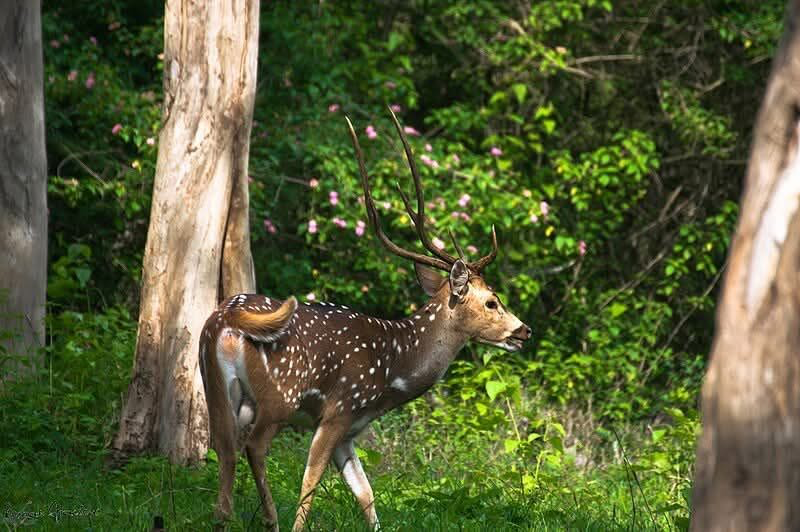
“The musk is held in its pod, yet oblivious of the source of fragrance, the deer wanders all over the forest in its search. O seeker, the Holy One too dwells within. How unaware we are of Him!”
“What can I say? What can I say that I have not said before? So I’ll say it again. The leaf has a song in it. Stone is the face of patience. Inside the river there is an unfinishable story and you are somewhere in it and it will never end until all ends. Take your busy heart to the art museum and the chamber of commerce but take it also to the forest. The song you heard singing in the leaf when you were a child is singing still. I am of years lived, so far, seventy-four, and the leaf is singing still.”
“The book of all books is in your own heart, in which are written and engraven the deepest lessons of divine instrution; learn therefore to be deeply attentive to the presence of God in your hearts – the God who is always speaking, always instructing, always illuminating the heart that is attentive.”
William Law, Anglican priest and theologian, 1686 – 1761, quoted in Fragments of Holiness for Daily Reflection
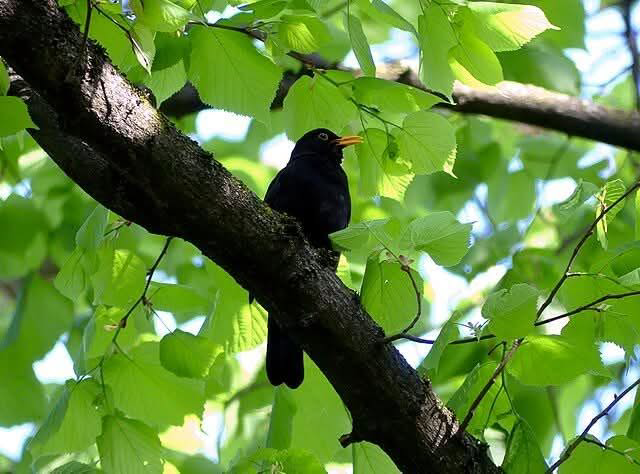
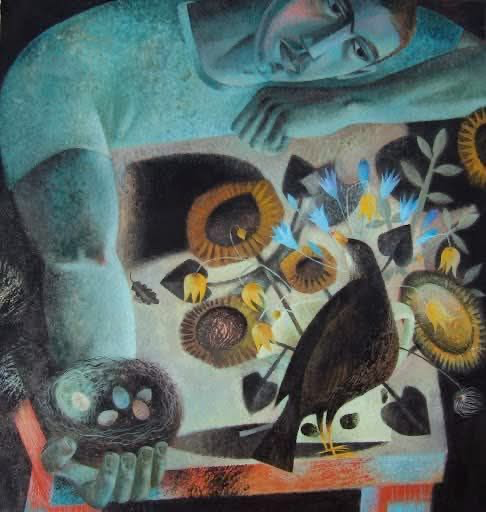
St. Kevin and the Blackbird (after Seamus Heaney) by Christine Valters-Paintner
“Imagine being like Kevin. Your grasping fist softens, fingers uncurl and palms open, rest upward, and the blackbird weaves twigs and straw and bits of string in the bowl of your hand, you feel the delicate weight of speckled blue orbs descend, and her feathered warmth settling in.
How many days can you stay, open, waiting for the shell to fissure and crack, awaiting the slow emergence of tiny gaping mouths and slick wings that need time to strengthen?
Are you willing to wait and watch? Not to withdraw your affections too soon? Can you fall in love with the exquisite ache in your arms knowing the hatching it holds?
Can you stay not knowing how broad those wings will become, or how they will fly awkwardly at first, then soar above you
until you have become the sky and all that remains is your tiny shadow swooping across the earth.”


 King Edward Street Chapel