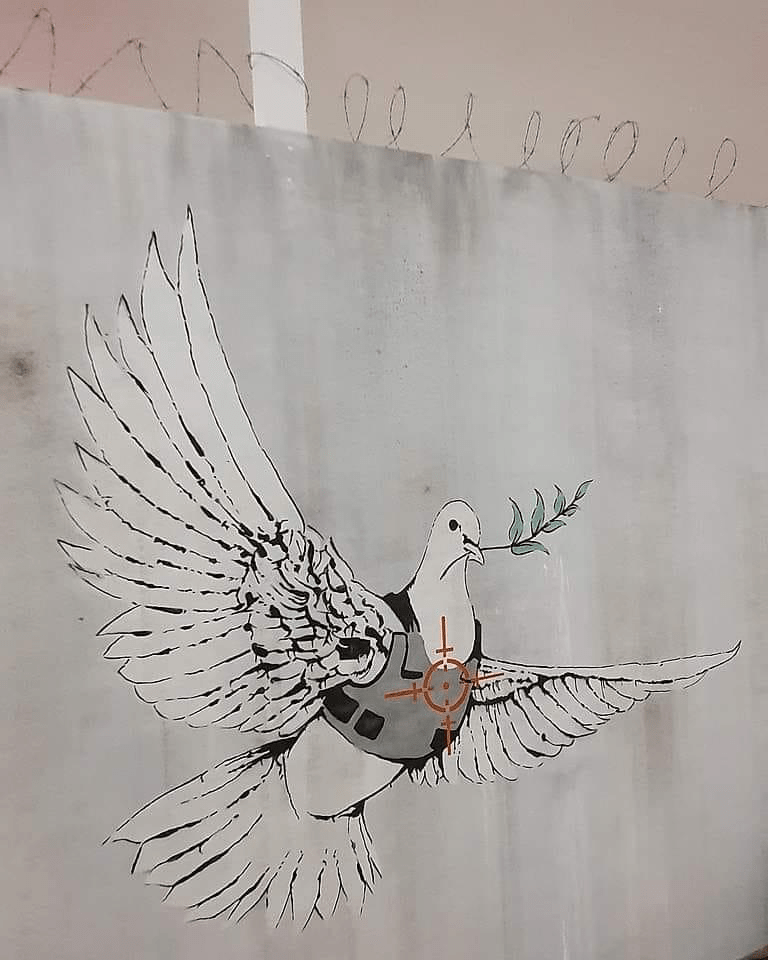
“There never was a good war or bad peace.”
Benjamin Franklin, September 11, 1773

A Unitarian Chapel in the heart of Macclesfield, welcoming people of all faiths and none
“There never was a good war or bad peace.”
Benjamin Franklin, September 11, 1773

“Go deeper.
Past thoughts into silence.
Past silence into stillness.
Past stillness into the heart.
Let love consume all that is left of you.”
Kabir, Indian poet (1440 – 1518)

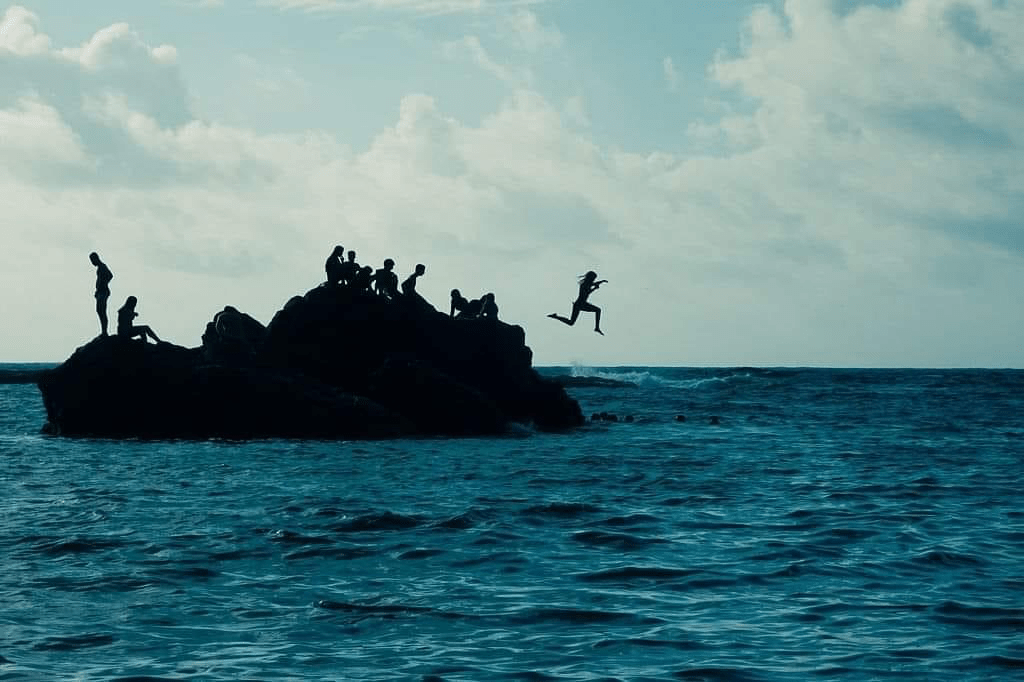
“No one leaves here alive. So please stop treating yourself as an afterthought. Eat delicious food. Walk in the sun. Jump into the sea. Speak the truth that you carry in your heart like a hidden treasure. Be silly. Be good. Be weird. There is no time for anything else.”
Anthony Hopkins

“When you recover or discover something that nourishes your soul and brings joy, care enough about yourself to make room for it in your life.”
Jean Shinoda Bolen

International Day of Clean Air for Blue Skies
“Lord, the air smells good today,
straight from the mysteries
within the inner courts of God.
A grace like new clothes thrown
across the garden, free medicine for everybody.
The trees in their prayer, the birds in praise,
the first blue violets kneeling.
Whatever came from Being is caught up in being, drunkenly
forgetting the way back.”
Rumi

“Perhaps one of the most profound expressions of nature is the simple equation E=mc2. Einstein’s calculation establishes that every mass contains a remarkable quantity of energy.
Look around the common objects in your room. Every object – even a bookmark, a paperweight, or a pair of shoes – contains enough power within itself to light a sun. And you are no different. What will it take to release the energy inside you? You might shed light across distances you’ve never dreamed of.”
From Earth Bound: Daily Meditations for All Seasons by Brian Nelson

International Day of Charity
“Can I see another’s woe,
and not be in sorrow too?
Can I see another’s grief,
and not seek for kind relief?”
William Blake (1757 – 1827), quoted in Fragments of Holiness for Daily Reflection

“”Human beings, vegetables, cosmic dust, we all dance to a mysterious tune, intoned in the distance by an invisible player.” Albert Einstein, interview
Those who, like Einstein, come daily into contact with the physical laws that order the universe cannot help but catch the strains of that great dance in which we are all whirling. Whether it be in the intricacy of cellular formation, or in the flow of currents, or in the vast patterning of the stellar orbits that illuminate the heavens, scientists are privileged too see into the structure of that dance.
The inapprehensible motion of life escapes our daily awareness, as does the tune of the cosmic dust that orders us all in one great dance of life. We do not hear it playing until we come to a point where our ordinary and subtle senses are aligned together. Then we come into harmony and awareness of both worlds at once, the apparent and the unseen worlds in conscious communion within us. These privileged moments cannot be sought; they come unbidden, surprising us into mystical vision. It may be that when we interrupt a walk on a high place at evening to admire the view, we apprehend the revolution of the earth as a physical motion beneath our feet; it may be that we become aware of a rhythm that weaves about the steady beating of our own heart, as if it were a partner in the dance.
The resonances to which we respond and the relationship between ourselves and the music of life give us the only clues available about the nature of the invisible partner – clues reassuring enough that we can trust the source of our music.
Attune to the cosmic tune and rhythm of life; stand and dance.”
From The Celtic Spirit: Daily Meditations for the Turning Year by Caitlin Matthews

“How significant that the rich, black mud of our dead stream produces the water lily– out of that fertile slime springs this spotless purity! It is remarkable that these flowers which are most emblematical of purity should grow in the mud.”
From Henry David Thoreau’s Journal, 1853

“To be hopeful in bad times is not just foolishly romantic. It is based on the fact that human history is a history not only of cruelty, but also of compassion, sacrifice, courage, kindness.
What we choose to emphasize in this complex history will determine our lives. If we see only the worst, it destroys our capacity to do something. If we remember those times and places-and there are so many-where people have behaved magnificently, this gives us the energy to act, and at least the possibility of sending this spinning top of a world in a different direction.
And if we do act, in however small a way, we don’t have to wait for some grand utopian future. The future is an infinite succession of presents, and to live now as we think human beings should live, in defiance of all that is bad around us, is itself a marvelous victory.”
Howard Zinn (1922 – 2010), historian, author, professor, playwright, and activist