“After tragedies, one has to invent a new world, knit it or embroider, make it up. It’s not gonna be given to you because you deserve it; it doesn’t work that way. You have to imagine something that doesn’t exist and dig a cave into the future and demand space. It’s a territorial hope affair. At the time, that digging is utopian, but in the future, it will become your reality.”
“Who knows how to bring up a changeling generation? Wave upon wave, they come. Our fear of magic is not theirs to answer for. We had one job. We have one job.
Trick babies, changing faces, changing places all along the way. How will we know the chrysalis for the rest of their iridescent selfhood? To recognize their true forms, we must unclutch rusty fingers and let go, let go, let go. Let them turn and try on all the jewels Turn and see their shifting colors Watch as they hold themselves up to the light Turn, turn, turn – surprised by the beauty By boundless possibility . . . !
We have one job. To bring up a changeling child, you must pur love into an active volcano Tossing food and care into the searing mouth Sometimes falling in. And crawling out. Falling and crawling again and again and again, keeping faith in rich soil for future gardens. You will not survive it on your own. And we cannot survive without them. The world has stolen nothing, has given us the children we need. Earth more generous than we may deserve. Protect these babies: furnace-forged trickster children with sparks in their smiles, chewing metal where we sucked stone. What we called death, they call transformation Where we saw fearful endings, they invite us, laughing, to begin.”
Changeling Generation, from Incantations for Rest by Atena O. Danner, Unitarian-Universalist minister
“The most beautiful and most profound experience is the sensation of the mystical. It is the sower of all true science. He to whom this emotion is a stranger, who can no longer wonder and stand rapt in awe, is as good as dead. To know that what is impenetrable to us really exists, manifesting itself as the highest wisdom and the most radiant beauty which our dull faculties can comprehend only in their primitive forms – this knowledge, this feeling is at the centre of true religiousness.”
Albert Einstein (1879 – 1955), theoretical physicist, quoted in Fragments of Holiness for Daily Reflection
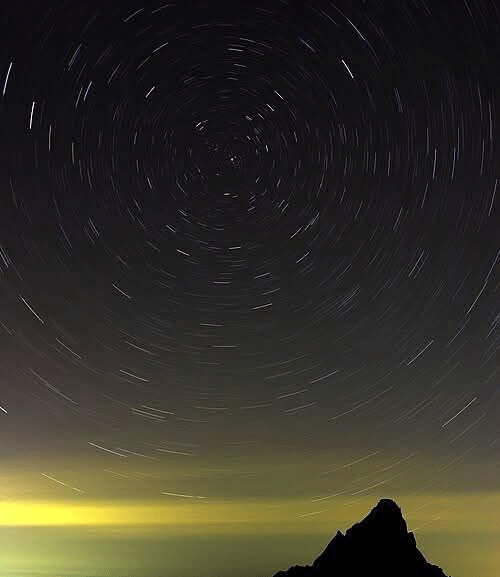
“Darkness waits apart from any occasion for it; like sorrow it is always available. This is only one kind, the kind in which there are stars above the leaves, brilliant as steel nails and countless and without regard.
We are walking together on dead wet leaves in the intermoon among the looming nocturnal rocks which would be pinkish gray in daylight, gnawed and softened by moss and ferns, which would be green, in the musty fresh yeast smell of trees rotting, earth returning itself to itself and I take your hand, which is the shape a hand would be if you existed truly. I wish to show you the darkness you are so afraid of.
Trust me. This darkness is a place you can enter and be as safe in as you are anywhere; you can put one foot in front of the other and believe the sides of your eyes. Memorize it. You will know it again in your own time. When the appearances of things have left you, you will still have this darkness. Something of your own you can carry with you.
We have come to the edge: the lake gives off its hush; in the outer night there is a barred owl calling, like a moth against the ear, from the far shore which is invisible. The lake, vast and dimensionless, doubles everything, the stars, the boulders, itself, even the darkness that you can walk so long in it becomes light.”
Interlunar by Margaret Atwood, born on this day in 1939
“Love is our true essence. Love has no limitations such as religion, race, nationality, or caste. We are all beads strung together on the same thread of love. To awaken this unity and to spread the love that is our inherent nature to others—this is the true aim of human life. Indeed, love is the only religion that can help humanity rise to great and glorious heights. And love should be the one thread on which all religions and philosophies are strung together. The beauty of society lies in the unity of hearts.”
“There is no use in keeping a ledger of all that has gone wrong. The birds do not. The river does not. Morning arrives, as it always does unafraid of beginning. You, too, may begin again. Forget the failed attempts, the words you should not have said, the long ache of waiting for something that never came. There is no refund for time spent in sorrow, but there is a meadow ahead and you may still walk through it. You have breath. You have bones that bend. You have the old trees, and they do not remember your mistakes. So what if you failed. So what if fear still knocks. Answer the door. Let it come in and sit beside you but do not hand it your days. Instead, spend them on the sweet blush of an apple, on the way the swan glides overhead with wings that make music of the sky. On the shape your cat makes as she sits in the sunlit window. Spend them on kindness. On praise. On laughter you did not expect. Let your life be the poem you did not plan to write, but wrote anyway in the soft ink of now. And if you must, fail with love. Fall with grace. Begin again like the leaf that doesn’t ask whether it’s time it simply lets go and trusts the ground to catch it.”
“In generosity and helping others, be like the river. In compassion and grace, be like the sun. In concealing others’ faults, be like the night. In anger and fury, be like the dead. In modesty and humility, be like the earth. In tolerance, be like the ocean. Appear as you are, or be as you appear.”
The Seven Advices of Jalāl al-Dīn Muḥammad Rūmī (1207 – 1273)
“We pray for wisdom not to be embittered by loss, not to be made hopeless by frustration, nor withdrawn and lonely in our sorrow, but to be more out-going, more heedful, more active and loving through all our days. May our lives be enriched by the fleeting joys, the momentary glimpses of beauty, the things of the moment and of the hour which we may treasure, and weave into a richer tapestry of memories and meanings.”
Jacob Trapp (1899 – 1992), Unitarian minister, quoted in Fragments of Holiness for Daily Reflection
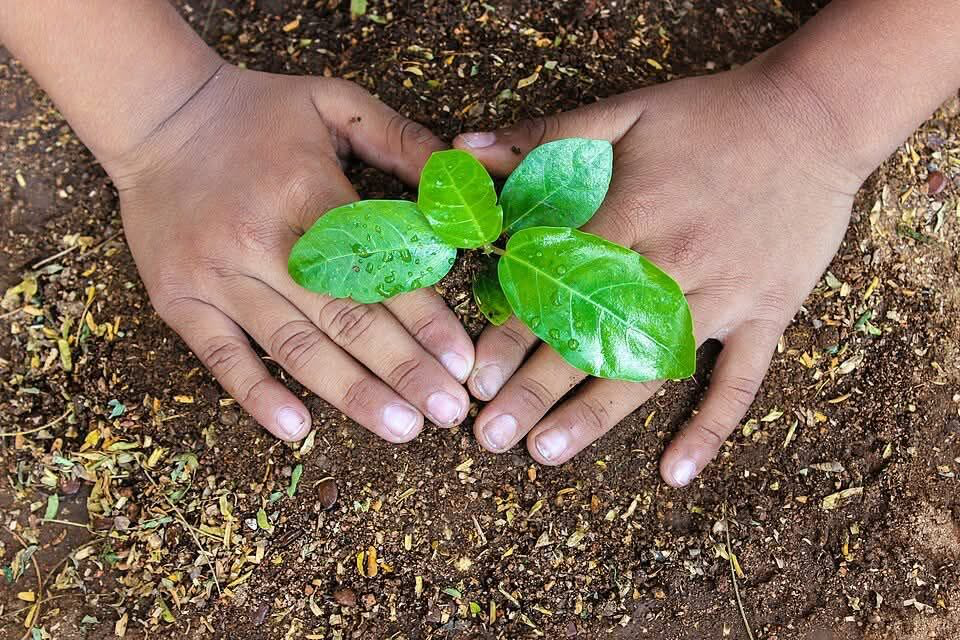
“Caring about the environment isn’t an obligation; it’s a matter of personal and collective happiness and survival. We will survive and thrive together with Mother Earth, or we will not survive at all.”
From Peace Is This Moment: Mindful Reflections for Daily Practice by Thich Nhat Hanh
Image: Madre Tierra (made of corn husks) by Mariana Ayala Bautista of Oaxaca