“Wisdom is shouting in the streets. It is simply not enough for those seeking wisdom merely to read about it. Wisdom must be discovered. And once discovered it must be learned by heart. You will not find wisdom in your books for it is not of your books, but of the books of our God/dess. What are these books? They are those which the Divine has written with her own finger. Where can they be found? Everywhere!”
Nicolas of Cusa (1401 – 1464), quoted in Christian Mystics by Matthew Fox
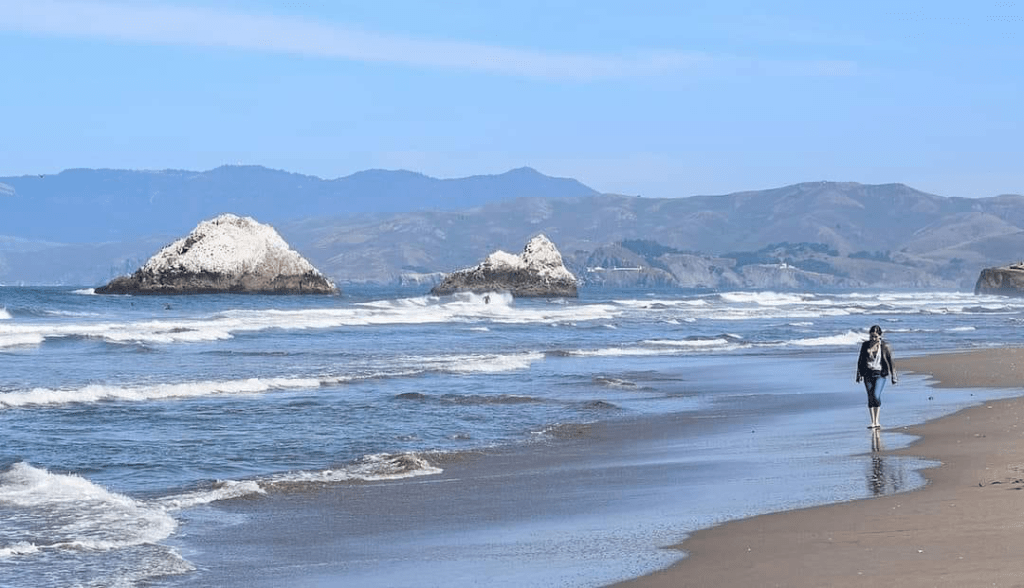
“I am in love with Ocean lifting her thousands of white hats in the chop of the storm, or lying smooth and blue, the loveliest bed in the world. In the personal life, there is always grief more than enough, a heart-load for each of us on the dusty road. I suppose there is a reason for this, so I will be patient, acquiescent. But I will live nowhere except here, by Ocean, trusting equally in all the blast and welcome of her sorrowless, salt self.”
“Time is something we created in order to measure the span of our lives. It’s not meant to create fear in you or paralyse you from moving forward. You are never too old and it is never too late to start over.”
Prince Rogers Nelson (1958 – 2016), born on this day
“The song of sacred truth is not a tuneless lay on one unvarying note; rather, it is a call sounding at all times for living beings to respond to its challenge in ways appropriate to the time and circumstances. Sacred truth resides in every living moment that we draw breath. We can only be soundboards of this truth, receiving its vibration and absorbing and reflecting its tonality. If we insist that ours is the only authorized song, then we cut across the frequencies of others.”
From The Celtic Spirit: Daily Meditations for the Turning Year by Caitlin Matthews
“We pray to you, Mother Earth, with gratitude For your holding and sustaining love For the air, water, and soil that feed us For the mountains and rivers and oceans that calm our spirits For loving and supporting all beings and all creation. We pray to you, Mother Earth, with humility Help us to remember our place in the great web of life Help us to remember that we are but a part of this great web, and that we must do our part for all life. We pray to you, Mother Earth, for forgiveness For our ignorance and wilful disregard of the damage we have done to you, to the air and the waters, and the soil and the life of this beautiful planet. We pray to you, Mother Earth, for fortitude to uphold our part in reversing the damage we have caused, for fortitude to make and sustain a commitment to do our part to heal the planet. Mother Earth, in gratitude and humility, we ask that you hold us and sustain us, as we strive to live in connection with you and all life.”
“Just by practising gratitude, we can find happiness. We must be grateful to our ancestors, our parents, our teachers, our friends, the earth, the sky, the trees, the grass, the animals, the soil, the stones. Looking at the sunlight or at the forest, we feel gratitude. Looking at our breakfast, we feel gratitude. When we live in the spirit of gratitude, there will be much happiness in our life.”
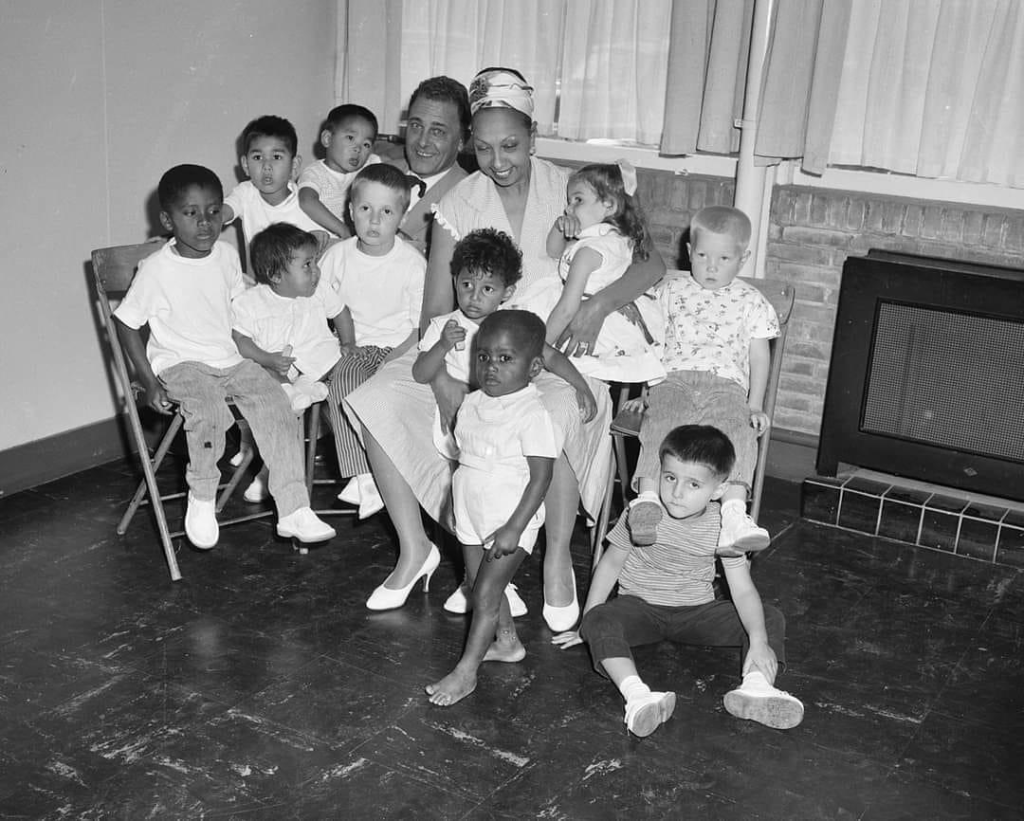
“All my life, I have maintained that the people of the world can learn to live together in peace if they are not brought up in prejudice… We must change the system of education and instruction. Unfortunately, history has shown us that brotherhood must be learned, when it should be natural.”
Josephine Baker (1906 – 1975), performing artist and civil rights activist, born on this day
“I believe that everything happens for a reason. People change so that you can learn to let go, things go wrong so that you appreciate them when they’re right, you believe lies so you eventually learn to trust no one but yourself, and sometimes good things fall apart so better things can fall together.”
“Why! who makes much of a miracle? As to me, I know of nothing else but miracles, Whether I walk the streets of Manhattan, Or dart my sight over the roofs of houses toward the sky, Or wade with naked feet along the beach, just in the edge of the water, Or stand under trees in the woods, Or talk by day with any one I love—or sleep in the bed at night with any one I love, Or sit at table at dinner with my mother, Or look at strangers opposite me riding in the car, Or watch honey-bees busy around the hive, of a summer forenoon, Or animals feeding in the fields, Or birds—or the wonderfulness of insects in the air, Or the wonderfulness of the sun-down—or of stars shining so quiet and bright, Or the exquisite, delicate, thin curve of the new moon in spring; Or whether I go among those I like best, and that like me best—mechanics, boatmen, farmers, Or among the savans—or to the soirée—or to the opera. Or stand a long while looking at the movements of machinery, Or behold children at their sports, Or the admirable sight of the perfect old man, or the perfect old woman, Or the sick in hospitals, or the dead carried to burial, Or my own eyes and figure in the glass; These, with the rest, one and all, are to me miracles, The whole referring—yet each distinct and in its place.
To me, every hour of the light and dark is a miracle, Every cubic inch of space is a miracle, Every square yard of the surface of the earth is spread with the same, Every foot of the interior swarms with the same; Every spear of grass—the frames, limbs, organs, of men and women, and all that concerns them, All these to me are unspeakably perfect miracles.
To me the sea is a continual miracle; The fishes that swim—the rocks—the motion of the waves—the ships, with men in them, What stranger miracles are there?”


 King Edward Street Chapel