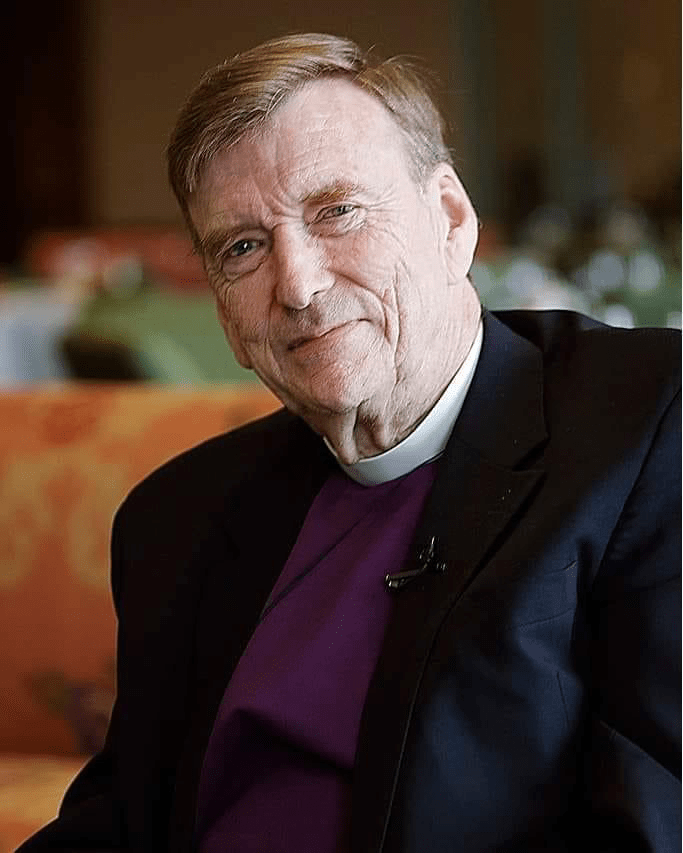
Thought for the day, Sunday 31st March

Easter Sunday

“Weeping may last for a night.
Weeping may last for a thousand nights.
But joy comes in the morning.
That morning we went to our beloved teacher’s tomb.
We went to anoint his body.
We carried oil and cloths.
We came to the tomb in sorrow, heads bowed low.
But hope does not die so easily.
It flickers inside, buried somewhere deep.
Hope grows, blossoms like a rose
even through stone,
even in hearts frozen by grief.
When we arrived at the place where he lay
We dropped all that we carried, in wonder, in fear,
to see the tomb laid open, and our beloved gone.
Do not weep, said the man.
This morning we rejoice.
Love lives. Hope lives.
Jesus is not here, he said.
Come and see.
He is risen.
Our beloved is risen. Our hope is risen.
Can it be?
Can it be?”

At the Tomb by Molly Housh Gordon

Thought for the day, Friday 29th March

“When we practice looking deeply into our body, we discover its nature of interbeing. It’s made of all the elements: earth, water, fire, air, space, and time. And we begin to see the mountains, the rivers, the trees, the flowers, the dew, the stars, the galaxies – everything in our body. The whole cosmos is there in it. And suddenly we see our body as something to bow down to. We discover deep reverence, and we learn to handle our body with respect.”

Thích Nhất Hạnh

Thought for the day, Thursday 28th March

“The goal of all religion is not to prepare us to enter into the next life; it is a call to live now, to love now, to be now – and in that way to taste what it means to be a part of a life that is eternal, a love that is barrier-free, and the being of a fully self-conscious humanity. That is the doorway into a universal consciousness that is part of what the word ‘God’ now means to me. This then becomes my pathway into the meaning of life that is eternal. It starts when we step beyond our hiding place in religion into thinking, and finally into being. It involves stepping beyond boundaries into wholeness, beyond a limited consciousness into a universal consciousness, beyond a God who is other into a God who is all.”

John Shelby Spong, former Episcopal Bishop of Newark, New Jersey, quoted in Fragments of Holiness for Daily Reflection

Thought for the day, Tuesday 26th March

“Whether we’re seeking inner peace or global peace or a combination of the two, the way to experience it is to build on the foundation of unconditional openness to all that arises. Peace isn’t an experience free of challenges, free of rough and smooth, it’s an experience that’s expansive enough to include all that arises without feeling threatened…

When we are training in the art of peace, we are not given any promises that, because of our noble intentions, everything will be okay. In fact, there are no promises of fruition at all. Instead, we are encouraged to simply look deeply at joy and sorrow, at laughing and crying, at hoping and fearing, all that lives and dies. We learn that what truly heals is gratitude and tenderness.”

Pema Chödrön

Thought for the day, Sunday 24th March

“Four proximate effects may be ascribed to love: namely, melting, enjoyment, languor and fervour. The freezing or hardening of the heart is a disposition incompatible with love, while melting denotes a softening of the heart, whereby the heart shows itself to be ready for the entrance of the beloved. If, then, the beloved is present and possessed, pleasure or enjoyment ensues. But if the beloved is absent, two passions arise: namely, sadness at is absence, which is denoted by languor; and an intense desire to possess the beloved, which is signified by fervour… Love is the cause of both pleasure and sorrow.”

Thomas Aquinas, quoted in Christian Mystics by Matthew Fox

Thought for the day, Friday 22nd March

World Water Day

“The soul of mankind is like water:
From Heaven coming, to Heaven rising,
Again descending— As it must—Earthward, ever circling.
It streams from high on the steep rock wall, a clear, pure stream;
Then lovingly dusts in swelling cloud-waves against smooth rock;
And striking lightly, it surges, veil-wrapped,
In whispers, to the depths below.
Then cascading against cliff towers,
It foams high, raging, unrelenting, to the Abyss.
In sprawling stream-beds it creeps in meadowed valleys,
And in the glassy lake shows the stars mirrored all in its visage.
Wind is the great wave, lovingly cooling,
Stirring the depths up to foaming whitecaps.
O soul of mankind, how like unto water!
O fate of mankind, how like unto wind!”

Song of the Spirits on the Water by Johann Wolfgang Goethe (1749 – 1832), born on this day, translated by Adam Sedia