What the Day Gives by Quaker poet Jeanne Lohmann (1923 – 2016),
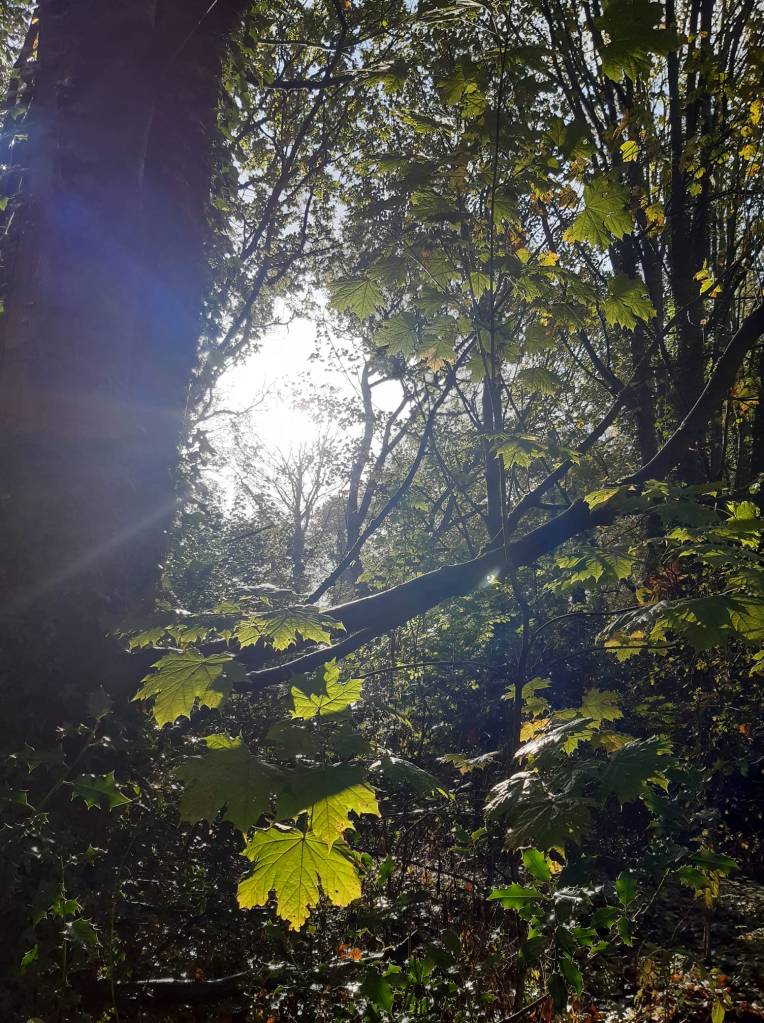
“Suddenly, sun. Over my shoulder in the middle of gray November what I hoped to do comes back, asking.
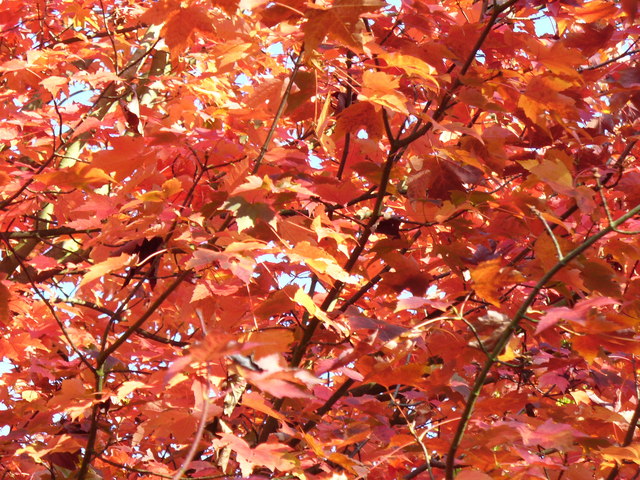
Across the street the fiery trees hold onto their leaves, red and gold in the final months of this unfinished year, they offer blazing riddles..
In the frozen fields of my life there are no shortcuts to spring, but stories of great birds in migration carrying small ones on their backs, predators flying next to warblers they would, in a different season, eat.
Stunned by the astonishing mix in this uneasy world that plunges in a single day from despair to hope and back again, I commend my life to Ruskin’s difficult duty of delight, and to that most beautiful form of courage, to be happy.”
“As long as coal miners die young and in agony so that we can have cheap electricity; so long as farm workers and their children become desperately ill because of exposure to deadly chemicals that help make our food cheaper; as long as workers at our favourite ‘big box’ store can be forced to work overtime without pay and to skip lunch breaks so that we can consume cheap consumer goods, goods which are manufactured by people whose working conditions are even more horrible – we are complicit, whether actively or passively. As Abraham Heschel, the great Jewish thinker and scholar, observed, we live in a world where “few are guilty, but all are responsible.” I am not free until you are free; and an injury to one is really an injury to all. This is what ‘community’ really means.” Unitarian Universalist minister Aaron McEmrys
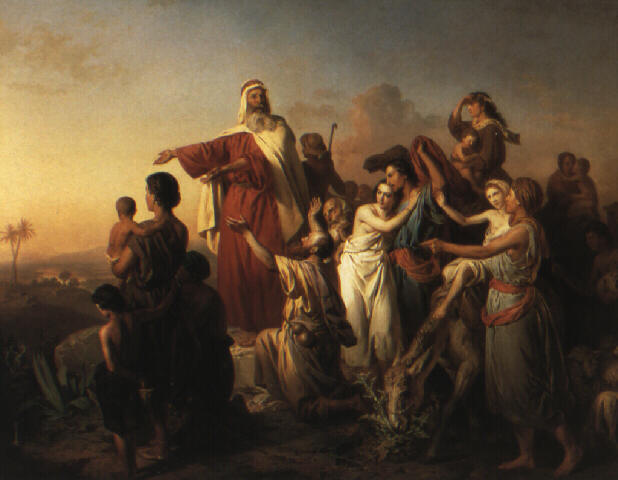
“The people never got used to Egypt. They never felt they belonged there. They never said, “They are the masters and we are the slaves and that’s the way it is.” So when Moses came and told them that they were going to leave, they believed him. Everyone has their Egypt. You’ve got to know who you are and what are your limitations. But heaven forbid to make peace with them. The soul within you knows no limits.” Rabbi Tzvi Freeman
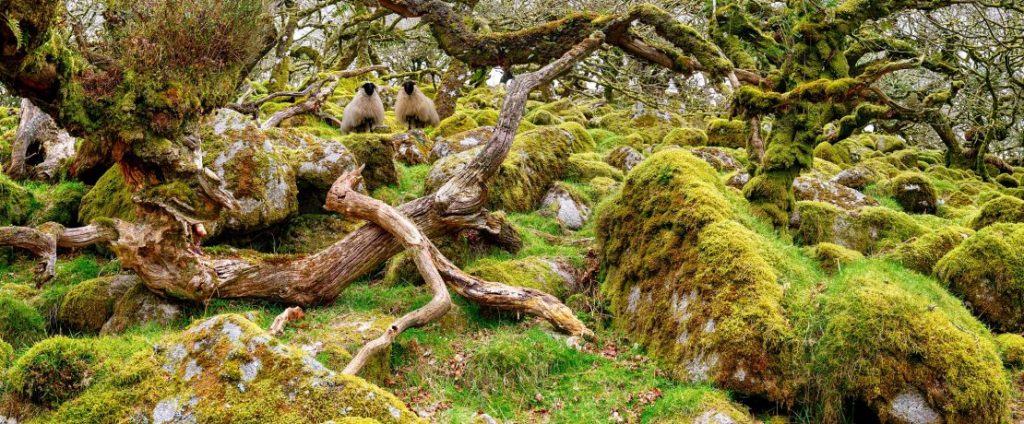
From Earth Pilgrim by Satish Kumar, “My life is an unending pilgrimage – I have no destination. Touching the earth – being connected to the soil, being mindful of every step – is how I practice eco-spirituality. Walking in the wild is my meditation. Walking in nature is my prayer, my peace and my solitude. Breathing, I inhale the air, which sustains me and connects me to all life. Dartmoor is my temple and my church – a glorious cathedral of nature – that is millions of years old. It was formed by the powers of geological time and the generosity of nature. I come here for the breath of fresh air, the smell of the wet grass, the coolness of water and the purity of rocks. I often make my pilgrimage to Wistman’s Wood, high up on the eastern moor. It’s an ancient oak grove that Druids made their place of worship thousands of years ago – the name Wistman’s Wood means ‘Wise man’s Wood’. The trees here hold firm to the earth to show us the resilience of life at high altitude, six hundred metres above sea level on the windy moors. They grow through massive slabs of granite. Local myths and legends speak of ‘nature spirits’ inhabiting these woods. When everything looks dry and dormant, lichen and moss thrive. Life is vibrant here. One species of lichen that lives in this wood can be found nowhere else on earth. It is exquisite, a vital link in the interconnectedness of all living things. These woods are sparse now. Once, much of the moor was covered in oak. Now there are only remnants of the ancient forest – the wood’s aura of light and shade. It is a place of mystery, memory and meaning, and I feel at one with this primeval paradise. I find these trees loving, compassionate, still, unambitious and enlightened. In eternal meditation they give pleasure to a pilgrim, shade to a deer, berries to a bird, beauty to their surroundings, health to their neighbours, branches for fire and leaves to the soil. They ask nothing in return, in total harmony with the wind and the rain. The trees are my mantra, my poem and my prayer. Through them, I learn about unconditional love and generosity. Mistletoe – a sacred plant – grows high on the trees when everything else is dormant. It is a celestial gift, the marvel of life in the darkness of winter. There is a symbiosis between the thrush and this plant. The mistle thrush’s song signals love as a biological imperative. Give the gift of kisses under mistletoe and your love will be eternal. The Buddha would sit under a tree for hours in his renowned posture, touching the earth with the fingertips of his right hand. This symbolizes reverence for the earth and recognition that everything – our body, our knowledge and wisdom – comes from and returns to the earth. Someone once asked the Buddha from whom he learnt the virtue of forgiveness. The Buddha pointed towards the earth. That became his famous posture and gesture. The oak wood below, lightning above and thunder all around, are part of the great mystery of nature. All the science, philosophy and poetry of the world put together cannot explain the ultimate meaning of existence. And I am happy to live with this mystery.”
“Emptiness. How unnerving emptiness can be when we see it as a lack. Empty time, empty space: our instinct is to fill them. Accepting emptiness, resting in it, we can see that emptiness is just another word for potential. In an empty place, there is room for growth. The first step is to accept the emptiness, just as it is.” Liz Proctor
From The Prophet by Khalil Gibran, “Beauty is not a need but an ecstasy. It is not a mouth thirsting nor an empty hand stretched forth, But rather a heart enflamed and a soul enchanted. It is not the image you would see nor the song you would hear, But rather an image you see though you close your eyes and a song you hear though you shut your ears. It is not the sap within the furrowed bark, nor a wing attached to a claw, But rather a garden for ever in bloom and a flock of angels for ever in flight. Beauty is life when life unveils her holy face. But you are life and you are the veil. Beauty is eternity gazing at itself in a mirror. But you are eternity and you are the mirror.”
Ancestral Wisdom, Present Guidance by Rozella Haydee White,
“Have you ever struggled with knowing who you are? Have you ever wondered what steps to take next in life or in love? Have you ever felt like you were stumbling around in the dark, trying to figure out which way to go? Have you ever felt disconnected from yourself and others?
There have been so many times in my life that I’ve experienced these things. Going through a divorce, battling depression, failing out of college, losing loved ones, watching plans I made disintegrate before my very eyes. All of these things left me reeling. I lost my sense of who I was (or who I thought I was) and felt like my ability to make any good decision was destroyed.
During these moments and others like it, I found myself in need of guidance. At one point I would have said that I needed someone to tell me what to do next. Just give me the right answer or show me the pathway and order my steps.
However, I soon realized that this was not what I truly needed. I didn’t need guidance that told me just what decision to make or what steps to take.
I needed guidance that led me into the depths of my soul and my body. I needed guidance that was otherworldly, leading me on a journey that revealed the wisdom I was seeking. Much like the journey that George Bailey took in the movie It’s a Wonderful Life, I needed guidance that showed me the truth of who I was, the reality of who I am, and the power of who I could be.
For much of my life, I tried the guidance of this world; guidance that came from intellect and from well-meaning folks who did not embody my lived reality. I found myself shifting and sifting through the advice and the information, struggling to make a connection with the guidance that I was given or pointed towards. None of it fit or seemed relevant to who I was or what I needed. I came to understand that the guidance I was seeking was one that tapped into the spirits of my ancestors: guidance that flowed from the women who came before me – Black and Brown women who were descendants of the Atlantic slave trade. Women whose bodies ended up in the Caribbean and on the southeastern shores of what came to be known as the United States of America. Women who faced every form of violence against their minds, hearts, bodies, and souls. Women who understood that life was more than what the eye could see. Women who refused to believe that their identities, experiences, and bodies were less than human, less than love, less than divine.
I needed and am continually in need of guidance that flows out of the embodied experiences of these women, guidance that taps into supernatural energy and reminds me of the power, wisdom, and love that are imprinted in the code of my DNA.
This world would have us believe that guidance and wisdom are rooted in the intellect and mind. However, our ancestral stories – if we take the time to listen and learn from them – show us that guidance and wisdom are rooted in our bodies: in our hearts and guts and limbs. This guidance is encoded in every nook and cranny of our physical beings and wants to make its way into our beliefs and behaviours.
Tapping into this guidance is a form of prayer. It requires stillness and deep listening. It requires care and attention to be paid to one’s physical form. It asks the question, “How is it with your soul?” and waits for the answer. It leads you to bear witness to your whole self – to your mind, body, heart, and soul.
Prayer is not about what you offer. It’s about what you receive. Prayer invites us into Holy space and time that transcends this space and time. Prayer has the power to access deep wisdom and life-giving guidance that the Divine wants to share with us; wisdom and guidance that is informed by the long line of people who have come before us. Their experiences, their struggles, their joys, their faith all teach us something about ourselves. When we don’t take the time to listen and reflect, we miss a part of our story.
I invite you to tap into the guidance that awaits us all.
Who are the women in your life who have come before you? What are their stories? How did they embody their truth? Where in your body do you feel this truth? What is the Holy One revealing to you when you listen to and learn from this truth?
May you listen and listen deeply to the guidance and wisdom that is aching to be made known, guidance and wisdom that you carry in your body. May this guidance and wisdom remind you of who and whose you are. May this guidance and wisdom reveal that you are not alone.”
Beannacht by John O’Donohue, written for his mother Josie, “On the day when the weight deadens on your shoulders and you stumble, may the clay dance to balance you. And when your eyes freeze behind the grey window and the ghost of loss gets in to you, may a flock of colours, indigo, red, green and azure blue come to awaken in you a meadow of delight. When the canvas frays in the curach of thought and a stain of ocean blackens beneath you, may there come across the waters a path of yellow moonlight to bring you safely home. May the nourishment of the earth be yours, may the clarity of light be yours, may the fluency of the ocean be yours, may the protection of the ancestors be yours. And so may a slow wind work these words of love around you, an invisible cloak to mind your life.”
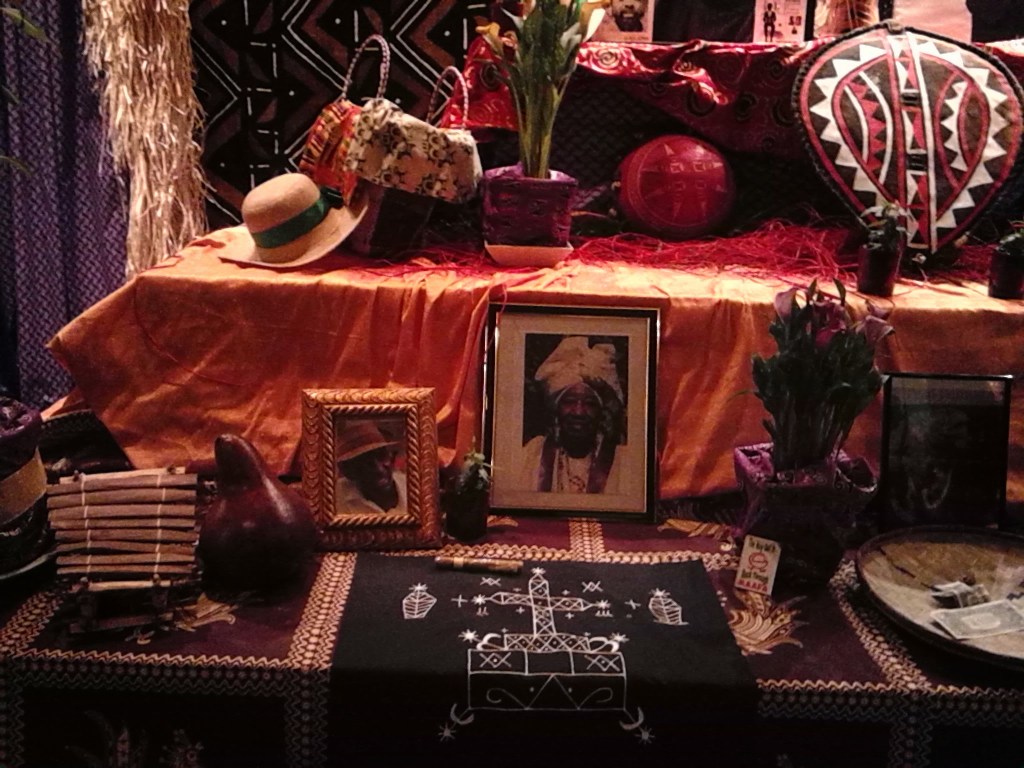
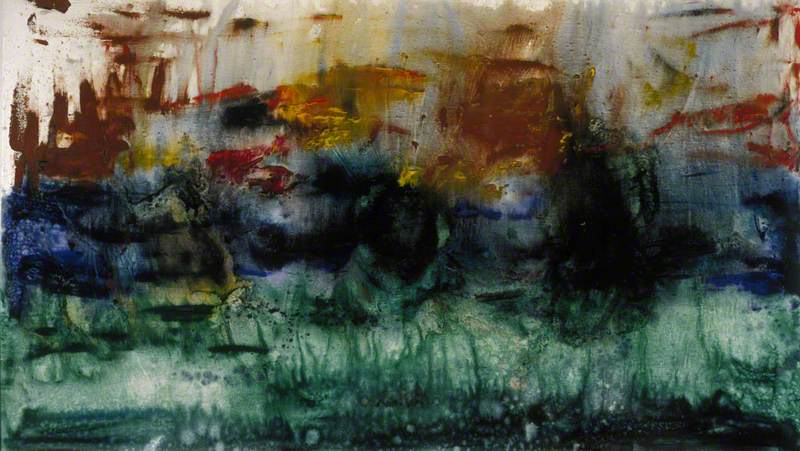
A Samhain Invocation by Laura Dobson (me) Spirits of Samhain, be with us as we celebrate Samhain in peace and honour the sanctity of our holy home, the Earth. Spirits of the East, Purity of Air, Great Wind, who blew our ancestors here from over the sea, bring us your inspiration, that we may know our breath is the same air breathed by our ancestors. May there be peace in the East. Spirits of the South, Heat of Fire, Great Sun, who has sustained all life on Earth since it began, bring us your cleansing warmth, that we may heal the wounds of the past. May there be peace in the South. Spirits of the West, Flow of Water, Great Ocean, who nurtured the first life on Earth and nourishes us all still, bring us your love, that we may show compassion to each other and to all beings. May there be peace in the West. Spirits of the North, Shelter of Earth, Great Cradle and Tomb, who births us all, nourishes us and receives us again, keep us grounded and help us to respect and care for you, as we become ancestors for those who will follow us. May there be peace in the North. Spirit of Life, Centre of All, we ask for your blessings, your guidance and your inspiration. Grant us the gift of self-knowledge. May there be peace in all the Worlds. Blessed Be. Image: Celebration of Earth, Air, Fire and Water by William Johnstone (1897-1981)
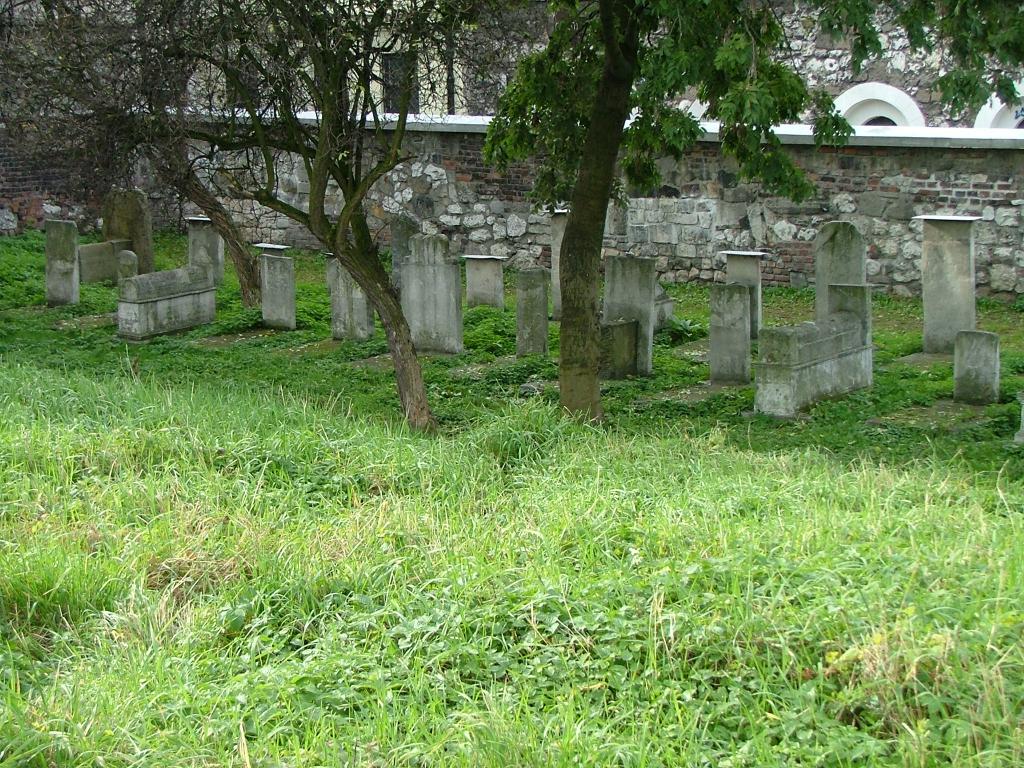
“In the city of Krakow, Poland, there lived a rich Jew by the name of Israel who was famous for his stinginess. The local beggars had long since given up trying to knock at his door. All attempts by the trustees of the community’s various charity funds to elicit at least a token contribution from him were met with polite but adamant refusals. Israel’s utter heartlessness outraged and mystified the Jews of Krakow. From the days of Abraham, charity had been the hallmark of the Jew; in 17th-century Europe, where Jews were subject to frequent confiscations of their property and expulsions from their homes, it was essential to the community’s very survival that those of means should aid their impoverished fellows. How could a Jew be so indifferent to the needs of his brothers and sisters? People started referring to the rich miser in their midst as “Israel Goy,”(non Jew) and the epithet stuck. Years passed, and the rich man grew old and frail. One day, the Krakow burial society received a summons to Israel’s home. “I feel that my days are numbered,” he told them when they came, “and I would like to discuss with you my burial arrangements. I have already had shrouds sewn for me, and I’ve hired a man to recite the kaddish for my soul. There is just one thing remaining: I need to purchase a plot for my grave.” The members of the burial society decided that this was their opportunity to collect the debt owed by Israel to the community. “As you know,” they said to him, “there is no set price for a cemetery plot. Each Jew pays according to his ability, and the money is used for charitable purposes. Since you are a wealthy man, and since—if you will excuse our bluntness—you have not been very forthcoming over the years in sharing the burdens of the community, we think it appropriate to charge you 1000 gulden.” The rich man calmly replied: “For my deeds I shall be judged in the heavenly court. It is not for you to judge what I did or did not do in the course of my life. I had planned to pay 100 guldens for my plot—quite a respectable sum—and that is what I shall pay, not a penny more. I’m not asking for any special location or a fancy gravestone. Bury me where you see fit. I have just one request: on my gravestone, I want it to be inscribed ‘Here lies Israel Goy.’” The members of the society exchanged glances: was the old man out of his mind? They spent a few more minutes at his bedside, hoping to secure at least a modest sum for the community poor, but finally left his house in exasperation. The entire town was abuzz with this latest show of miserliness by “Israel Goy.” How low can a man sink! Even at death’s door, he’s hoarding his wealth, refusing to share his blessings with the needy. Israel’s funeral was a sorry affair. It was difficult to even scrape together the needed quorum of ten to conduct a proper Jewish burial. He was buried off to a side, on the outskirts of the cemetery. No eulogies were held, for what could be said of such a man? The following Thursday evening, the was a knock on the door of the chief rabbi of Krakow, the famed Rabbi Yomtov Lipman Heller (1579–1654, known as the author of Tosefot Yom Tov). In the doorway stood a man who explained that he had nothing with which to purchase wine, candles, challah and food for Shabbat. The rabbi gave him a few coins from his private charity fund and wished him a “Good Shabbat.” A few minutes later there was another knock on the door, heralding a similar request. A third petitioner followed, and then a forth and a fifth. Within the hour, no less than twenty families came to ask for the rabbi’s aid to meet their Shabbat expenses. The rabbi was mystified: nothing like this had happened before in all his years in Krakow. Why this sudden plague of poverty? Rabbi Heller called an emergency meeting of the trustees of the community’s charity funds, but they could not explain the phenomenon. They, too, had been deluged with hundreds of requests for aid in the last few hours. The communal coffers had been virtually emptied! As if on cue, there was another knock on the door. “Tell me,” asked the rabbi after handing a few coins to the latest petitioner, “how did you manage until now? What did you do last week?” “We bought on credit at the grocer’s,” replied the pauper. “Whenever we needed food and did not have with what to pay, the merchant said it was not a problem—he just wrote it down in his ledger. He didn’t even bother us about payment. But now he says that that arrangement is over.” Investigation revealed that hundreds of families in Krakow had subsisted this way—up to now. For some reason, none of the grocers, fishmongers and butchers were willing to extend credit any longer to the town’s poor. The rabbi called the town’s food merchants to his study and demanded to know what was going on. At first they refused to tell him. But Rabbi Heller was adamant. “You’re not leaving this room,” he insisted, “until you tell me what this is all about.” Finally, the truth came out. For years, Israel had supported hundreds of the poorest families in Krakow. Every week the town’s merchants would present the bill to him, and he paid in full. His only condition was that not a soul, not even their closest family members, should know. “If any one of you breathes a word of this to anyone,” he threatened, “you won’t see another copper from me ever again.” Rabbi Yomtov Lipman was shattered. Such a special person had lived in their midst, and they, in their haste to judge him, had insulted him and reviled him. The rabbi announced that the shloshim (30th-day anniversary of the passing) of Israel shall be a public fast day. All adults will neither eat nor drink from morning to evening, and all will gather at the cemetery to beg forgiveness from the deceased. The rabbi himself eulogized Israel. “You,” he cried, “fulfilled the mitzvah of tzedakah (charity) in its most perfect form—without taking any credit for the deed, and ensuring that no recipient of your generosity should ever stand ashamed before his benefactor or feel indebted to him. And we repaid you with derision and scorn . . .” The rabbi expressed the wish that when his own time came, he should be laid to rest next to Israel. “We buried you near the fence, like an outcast, but I shall consider it a great honor and privilege to be buried near you!” The rabbi also instructed that the rich man’s last wish be fulfilled. On the marker raised above the grave were etched the words “Here lies Israel Goy.” However, one word was added to the inscription—the word kadosh, “holy one.” And so the inscription reads to this day on the gravestone adjoining that of the famed Rabbi Yomtov Lipman Heller in the old Jewish cemetery of Krakow: “Here lies Israel Goy Kadosh.””


 King Edward Street Chapel