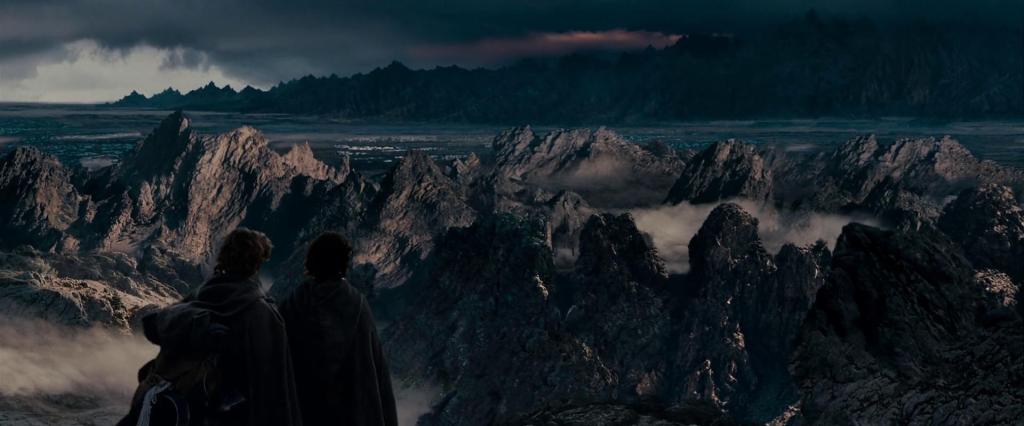
From The Fellowship of the Ring by J.R.R. Tolkien, published on this day in 1954, “The road must be trod, but it will be very hard. And neither strength nor wisdom will carry us far upon it. This quest may be attempted by the weak with as much hope as the strong. Yet it is oft the course of deeds that move the wheels of the world: Small hands do them because they must, while the eyes of the great are elsewhere.”
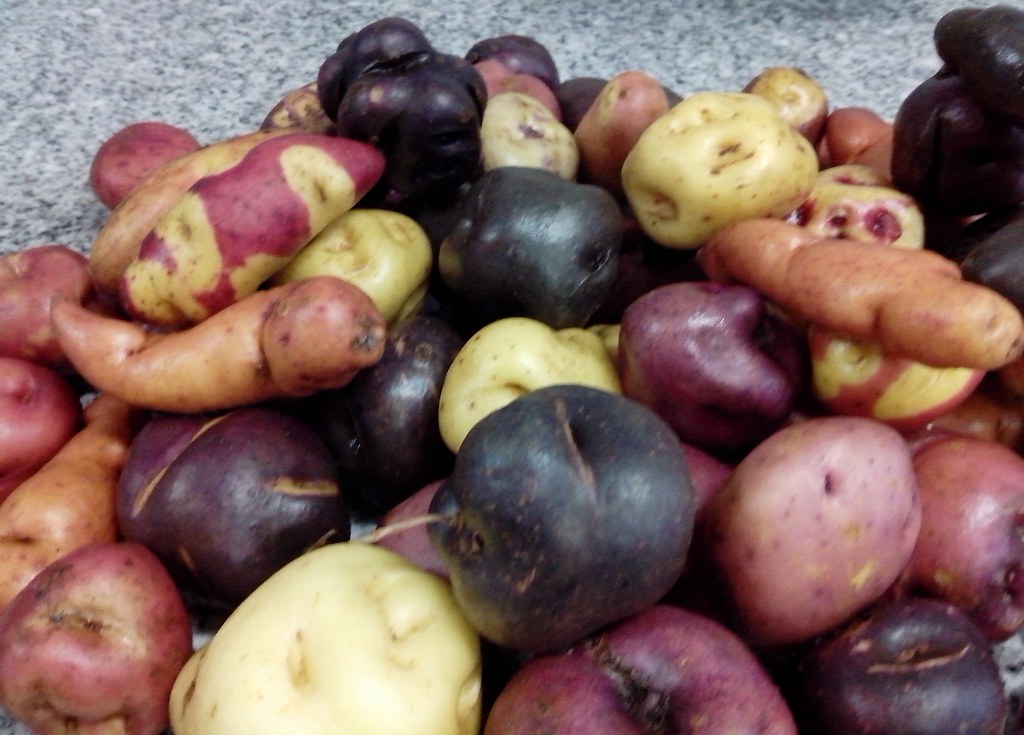
On this day in 1586 Sir Thomas Harriot introduced potatoes to Europe on his return to England from America. Prayer and Potatoes by Tim Sandles, “An old lady sat in her old arm-chair With wrinkled visage and dishevelled hair And hunger-worn features; For a few days and for weeks her only fare, As she sat there in her old arm-chair, Had been potatoes. But now they were gone; of bad and good Not one was left for the old lady’s food Of those potatoes; And she sighed and said “What shall I do? Where shall I send, and to whom shall go For more potatoes”? And she thought of the vicar over the way, The vicar so ready to worship and pray, Whose cellar was full of potatoes. And she said; “I will send for the vicar to come: He’ll not mind much to give some Of such a store of potatoes. And the vicar came as fast as he could, Thinking to do the old lady some good, But never for once of potatoes: He asked her at once what was her chief want, And she, simple soul, expecting a grant, Immediately answered “potatoes.” But the vicar’s religion didn’t lie that way; He was more accustomed to preachy and to pray, Than to give of his hoarded potatoes: So, not hearing, of course, what the old lady said, He rose to pray, with uncovered head, But she only thought of potatoes. He prayed for patience, and wisdom and grace, But when he prayed “Lord give her peace,” She audibly sighed, “Give potatoes;” And at the end of each prayer which he said, He heard, or thought that he heard in its stead, The same request for potatoes. The vicar was troubled; knew not what to do; ‘Twas very embarrassing to have her act so About “those carnal potatoes.” So, ending his prayer, he started for home; But, as the door closed behind him, he heard a deep groan, “O give to the hungry potatoes!” And that groan followed him all the way home; In the midst of the night it haunted his room- “O give to the hungry potatoes!” He could bear it no longer; arose and dressed, From his well-filled cellar taking in haste A bag of his best potatoes. Again he went to the widow’s lone hut; Her sleepless eyes she had not yet shut; But there she sat in that old arm chair, With the same wan features, the same sad air, And entering in he poured on the floor A bushel or more of his goodly store Of choicest potatoes. The widow’s heart leapt up with joy; Her face was haggard and wan no more. “Now,” said the vicar, “shall we pray?” “Yes,” said the widow; “now you may.” And he kneeled him down on the sandy floor, Where he had poured his goodly store, And such a prayer the vicar prayed As never before his lips essayed; No longer embarrassed, but free and full He poured out the voice of a liberal soul, And the widow responded aloud “amen!” But said no more of potatoes. And would you, who hear this simple tale, Pray for the poor, and praying “prevail,” Then preface your words with alms and good deeds: Search out the poor, their wants and their needs: Pray for peace, and grace, and spiritual food, For wisdom, and guidance for all these are good, But don’t forget the potatoes.”
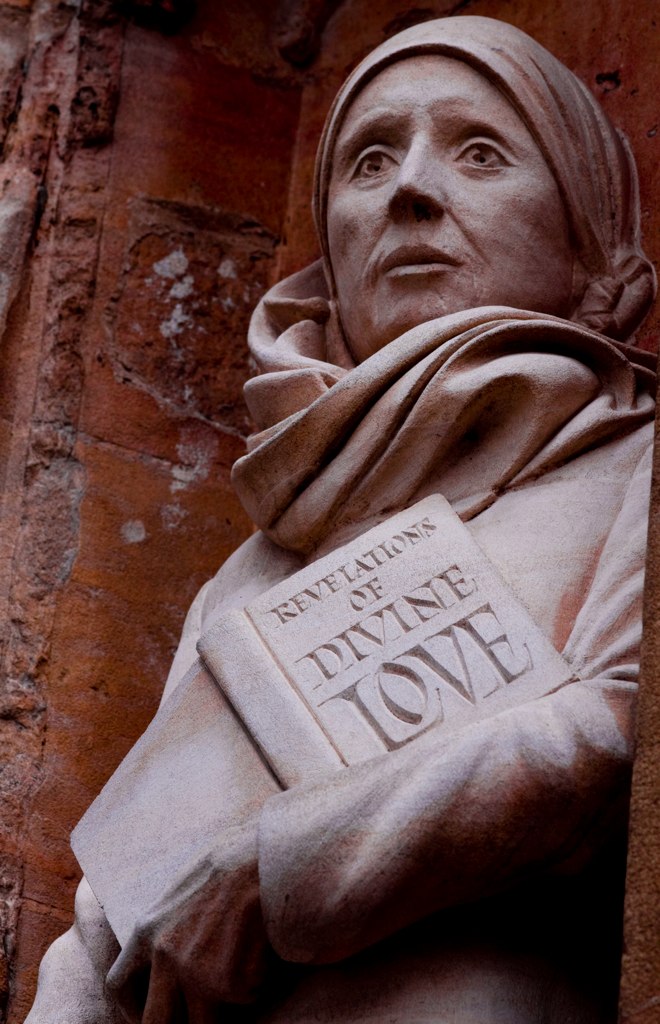
“The mixture of sorrow and joy is so powerful that we cannot figure out how to handle it all, let alone assess how our fellow spiritual seekers are doing. The diversity of feelings can be overwhelming… In those moments when we sense the presence of God we surrender to him, truly willing to be with him, with all our heart, with all our soul, and with all our strength. This holy assent is all that matters. It eclipses all the wicked inclinations inside us – physical and spiritual – that might lead us to miss the mark… Sometimes however, that sacred sweetness lies deeply buried, and we fall again into blindness, which leads to all kinds of sorrow and tribulation… Pray for the time when God will once again reveal himself and fill our hearts with the sweetness of his presence. And so we remain in this muddle all the days of our lives. But our Beloved wants us to trust that he is always with us.” Julian of Norwich (c.1343 – c.1416) On this day in 1377 the city council of Rugusa (now Dubroknik) passed a law saying newcomers from plague areas must isolate for 30 days, the first recorded example of quarantine
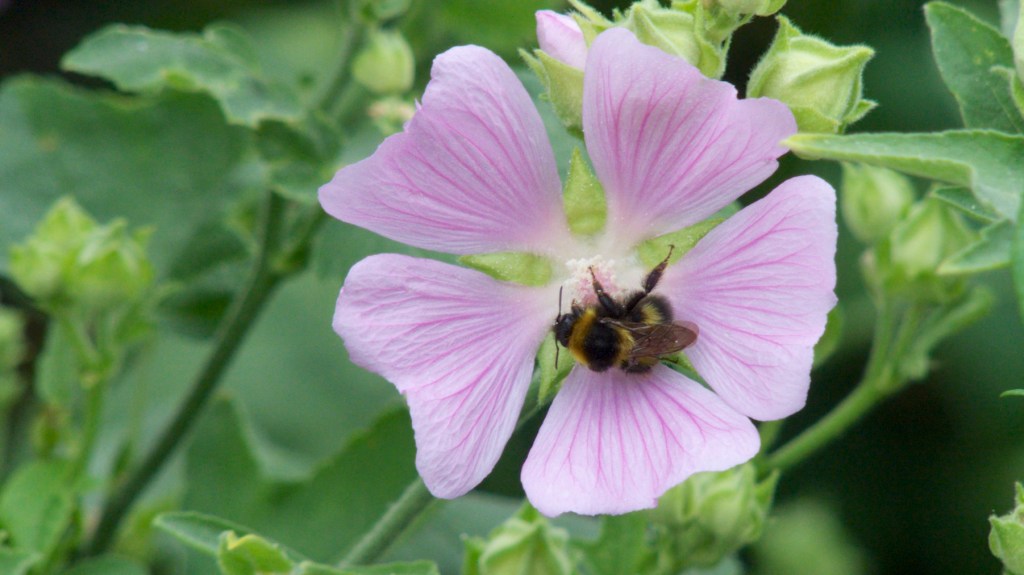
“It happens to those who live alone that they feel sure of visitors when no one else is there, until the one day and the one particular hour working in the quiet garden, when they realize at once that all along they have been an invitation to everything and every kind of trouble and that life happens by to those who inhabit silence like the bees visiting the tall mallow on their legs of gold, or the wasps going from door to door in those tall forests made so easily by the daisies. I have my freedom today because nothing really happened and nobody came to see me, only the slow growing of the garden in the summer heat and the silence of that unborn life making itself known at my desk, my hands still dark with the crumbling soil as I write and watch the first lines of a new poem like flowers of scarlet fire coming to fullness in a clear light.” David Whyte
“A rabbi asked his students, “How do you know that night has ended and the day is returning?” One student answered, “Is it when you see an animal in the distance and can tell whether it is a sheep or a dog?” “No,” the rabbi replied. Another student asked, “Is it when you look at a tree in the distance and can tell whether it is a fig or an olive tree?” “No,” replied the rabbi. “It is when you look on the face of any man or woman and see that he or she is your brother or sister. If you cannot do this, no matter what the time, it is still night.”” Jewish tradition, author unknown
“The most beautiful and most profound experience is the sensation of the mystical. It is the sower of all true science. He to whom this emotion is a stranger, who can no longer wonder and stand rapt in awe, is as good as dead. To know that what is impenetrable to us really exists, manifesting itself as the highest wisdom and the most radiant beauty which our dull faculties can comprehend only in their primitive forms – this knowledge, this feeling is at the centre of true religiousness… I like to experience the universe as one harmonious whole. Every cell has life. Matter, too, has life; it is energy solidified. Our bodies are like prisons, and I look forward to be free, but I don’t speculate on what will happen to me. I live here now, and my responsibility is in this world now.” Albert Einstein
“Ironic, but one of the most intimate acts of our body is death. So beautiful appeared my death – knowing who then I would kiss, I died a thousand times before I died. “Die before you die,” said the Prophet Muhammad. Have wings that feared ever touched the Sun? I was born when all I once feared – I could love.” Rabia al-Basri (c.717 – 801), Sufi saint
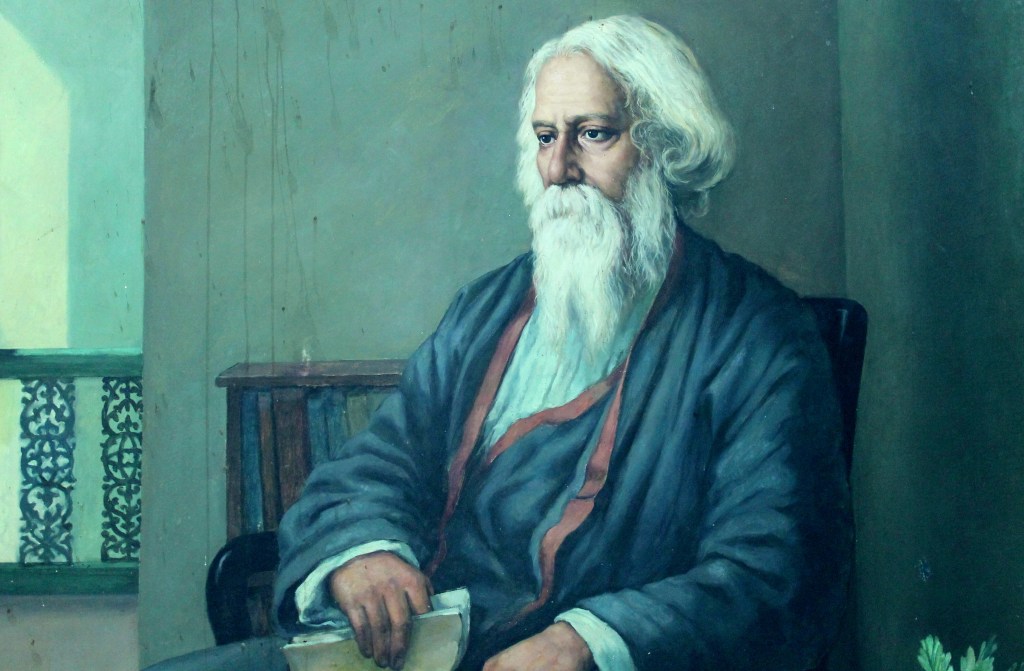
“Where the mind is without fear and the head is held high; where knowledge is free; where the world has not been broken up into fragments by narrow domestic walls; where words come out from the depth of truth; where tireless striving stretches its arms towards perfection; where the clear stream of reason has not lost its way into the dreary desert sand of dead habit; where the mind is led forward into ever-widening thought and action – into that heaven of freedom, let my country awake.” Rabindranath Tagore (1861 – 1941), Bengali poet and the first non-European to win the Nobel Prize for Literature (in 1913)
“When I open my eyes to the outer world, I feel myself as a drop in the sea. But when I close my eyes and look within, I see the whole universe as a bubble raised in the ocean of my heart.” Hazrat Inayat Khan (1882 – 1927), teacher of Universal Sufism, quoted in Fragments of Holiness for Daily Reflection
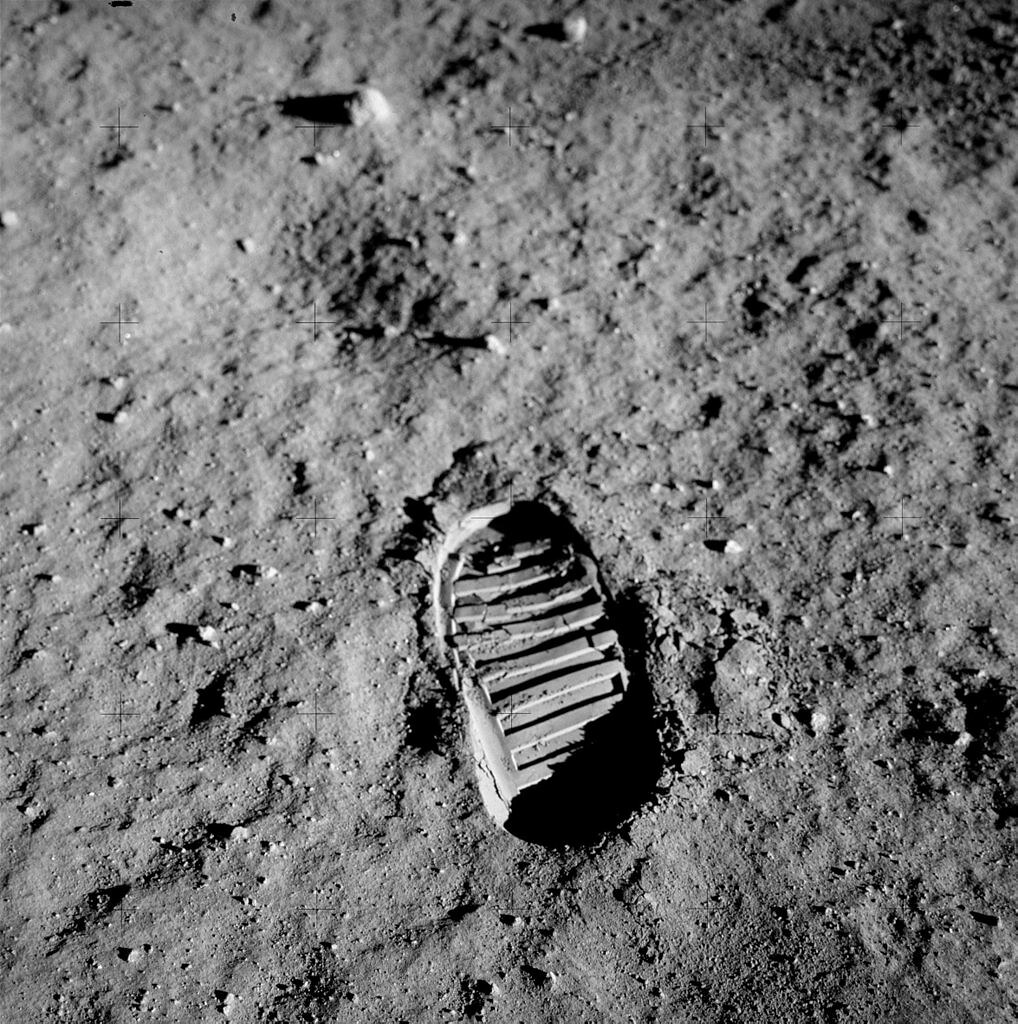
“These are a few of my favourite life lessons that I learned as a result of walking on the Moon and the preparation that took us there—the guiding principles that have helped keep me going since returning to Earth. • The sky is not the limit … there are footprints on the Moon! • Keep your mind open to possibilities. • Show me your friends, and I will show you your future. • Second comes right after first. • Write your own epitaph. • Maintain your spirit of adventure. • Failure is always an option. • Practice respect for all people. • Do what you believe is right even when others choose otherwise. • Trust your gut … and your instruments. • Laugh … a lot! • Keep a young mind-set at every age. • Help others go beyond where you have gone. I hope these lessons will be as helpful to you as they have been to me. Take it from a man who has walked on the Moon: Be careful what you dream—it just might come to pass, so be prepared. Apollo is the story of people at their best, working together for a common goal. We started with a dream, and we can do these kinds of things again. With a united effort and a great team, you too can achieve great things. I know, because I am living proof that no dream is too high!”
Buzz Aldrin, who landed on the moon with Neil Armstrong on this day in 1969



 King Edward Street Chapel