“You are not the oil, you are not the air — merely the point of combustion, the flash-point where the light is born. You are merely the lens in the beam. You can only receive, give, and possess the light as the lens does. If you seek yourself, you rob the lens of its transparency. You will know life and be acknowledged by it according to your degree of transparency — your capacity, that is, to vanish as an end and remain purely as a means.”
From Markings by Dag Hammarskjöld (1905 – 1961), UN Secretary-General and Unitarian, born on this day
“I remember I used to half believe and wholly play with fairies when I was a child. What heaven can be more real than to retain the spirit-world of childhood, tempered and balanced by knowledge and common-sense.”
From the 1896 journal of Beatrix Potter (1866 – 1943), writer, artist and Unitarian, born on this day
“O God, you have given us a beautiful earth— Grant us the wisdom to use it well. Lead us to an inner life in which we can rejoice. Speak peace to us, that we may live in peace. May your mercy and truth meet together Righteousness and peace kiss each other, Surrounding us with your light. Help us know true prosperity, And be gentle with your Earth. Guide our feet in the ways of peace.”
“Your vision will become clear only when you can look into your own heart. Without, everything seems discordant; only within does it coalesce into unity. Who looks outside dreams; who looks inside awakes.”
Letter to Fanny Bowditch, 22 October 1916, by Carl Jung (1875 – 1961), founder of analytical psychology, born on this day
“The same stream of life that runs through my veins night and day runs through the world and dances in rhythmic measures. It is the same life that shoots in joy through the dust of the earth in numberless blades of grass and breaks into tumultuous waves of leaves and flowers. It is the same life that is rocked in the ocean-cradle of birth and death, in ebb and flow.. I feel my limbs are made glorious by the touch of this world of life.. And my pride is from the life-throb of ages dancing in my blood this moment.”
“A rabbi asked his students, “How do you know that night has ended and the day is returning?” One answered, “Is it when you see an animal in the distance and can tell whether it is a sheep or a dog?” “No,” the rabbi replied. Another asked, “Is it when you look at a tree in the distance and can tell whether it is a fig or an olive tree?” “No,” replied the rabbi. “It is when you look upon the face of any man or woman and can see that he or she is your brother or sister. If you cannot do this, no matter what the time, it is still night.”
Hasidic tale, shared in Fragments of Holiness for Daily Reflection
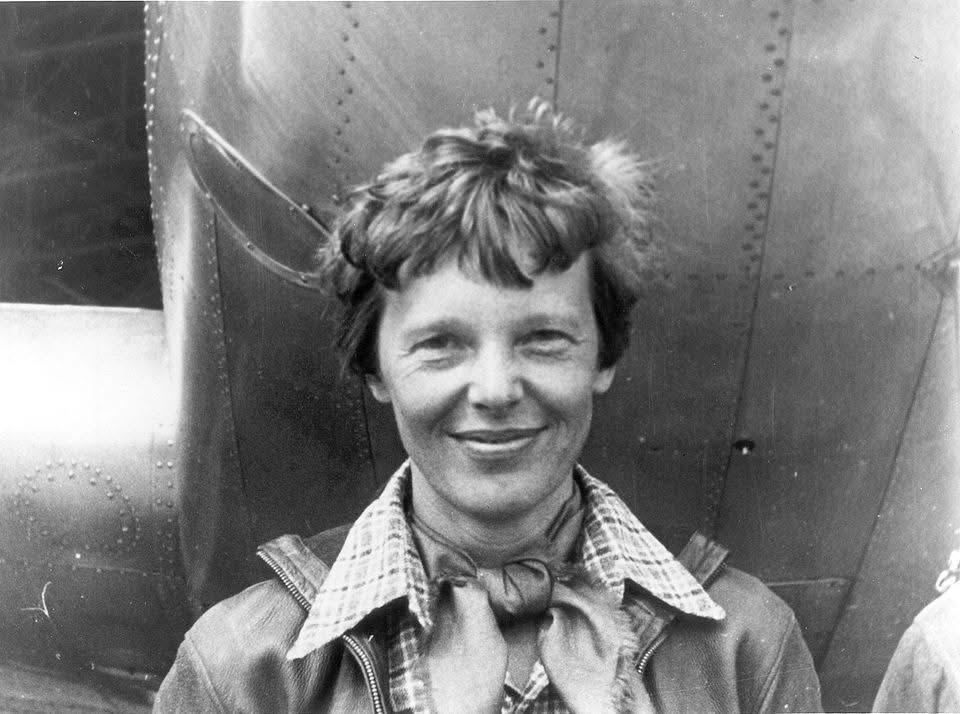
“In my life I had come to realize that when things were going very well indeed it was just the time to anticipate trouble. And, conversely, I learned from pleasant experience that at the most despairing crisis, when all looked sour beyond words, some delightful “break” was apt to lurk just around the corner.”
From notes made in preparation for her last flight by Amelia Earhart (1897 – 1937), aviator, born on this day
“The same stream of life that runs through my veins night and day runs through the world and dances in rhythmic measures. It is the same life that shoots in joy through the dust of the earth in numberless blades of grass and breaks into tumultuous waves of leaves and flowers. It is the same life that is rocked in the ocean-cradle of birth and death, in ebb and flow.. I feel my limbs are made glorious by the touch of this world of life.. And my pride is from the life-throb of ages dancing in my blood this moment.”
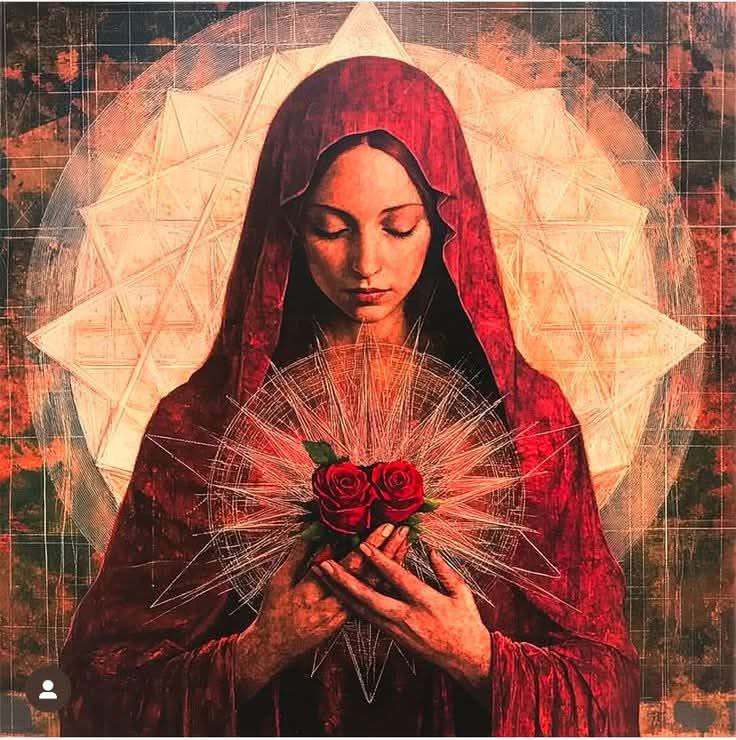
“Magdalene her name means tower not whore, not sinner, not infidel of the seven devils they labeled her less-than because they feared what her tower held: not sin but scripture not shame but sacredness not filth but flame a tower of truth but towers fall, don’t they? when men build stories from stone and forget the word was born in woman’s body at the edge of things cracked open with knowing she was never the footnote not the soft epilogue to his ministry she was his equal, mirror to messiah, goddess to god: his counter-spell, his mirror myth, his ritual in red; not whore, not slave, but beloved; a woman undone by the very thing that made her divine: her desire. But listen, love— she didn’t break the jar because she was desperate she broke it because she was called called to speak when silence was safer called to stay when the others fled called to embody the towering truth: that strength and softness are not separate that holiness can wear hips that god grew inside a womb but also walked beside one loved and worshipped one when the world bloomed in bruises and blessings this kind of power will not do if we let a woman be beloved, be equal, be tower what’s next? a tabernacle? a sanctuary? a truth that eclipses all the lies of smallness and inferiority? so they silenced her with ink and pulpit turned her hips into heresy, her hair into sin her hands into something not fit to beckon or bless they scraped the sacred from her body and called it repentance scrubbed her clean of her wildness tried to bleach her into silence folded her into a cautionary tale the scarlet stain on holy scrolls but history is porous and so is the grave after centuries of redacted gospel after pulpits built on her silence she is waking from shadow in boots of fervor incense clinging to the brazier of her spine this is not a tale of repentance this is a story of theft and now it is a tale of return another kind of resurrection the tower stands again, friends not in lace and halos but barefoot with red clay on her soles and a voice like an earthquake wrapped in linen she does not walk back into scripture she bursts through the margins mud-footed and mythic pulling the divine back into the body she has risen again not with trumpets but with soil under her nails the rhizome gospel under her tongue green and feral and determined to grow she’s coming back to reclaim every woman called ruin for daring to know spirit by touch and tenderness she’s here to walk the crooked path again the one where myth and marrow meet she is not looking for apology she is looking for fire in the eyes of humans who remember that holiness can wear hips that sacredness is not silence and that sometimes the most faithful thing you can do is stand tall a tower of truth a sentinel at the beginning of a new story rooted in love that outlasts hatred a tower of belonging that outshines fear”




 King Edward Street Chapel