“We often hear grown-up people complaining of having to hang about a railway station and wait for a train. Did you ever hear a small boy complain of having to hang about a railway station and wait for a train? No; for to him to be inside a railway station is to be inside a cavern of wonder and a palace of poetical pleasures. Because to him the red light and the green light on the signal are like a new sun and a new moon. Because to him when the wooden arm of the signal falls down suddenly, it is as if a great king had thrown down his staff as a signal and started a shrieking tournament of trains. I myself am of little boys’ habit in this matter. They also serve who only stand and wait for the two-fifteen.”
Return Again, a traditional Jewish song, sung during the Days of Awe (the 10 day period between Rosh Hashanah and Yom Kippur, when people seek to bring themselves back into alignment with themselves, each other, the earth and God):
“Return again, return again Return to the land of your soul Return again, return again Return to the land of your soul
Return to what you are Return to who you are Return to where you are born and reborn again
Return to what you are Return to who you are Return to where you are born and reborn again
Return again, return again Return to the land of your soul”
“Lord: it is time. The summer was generous. Lay your shadows onto the sundials and let loose the winds upon the fields. Command the last fruits to be full, give them yet two more southern days, urge them to perfection, and chase the last sweetness into the heavy wine. Who now has no house, builds no more. Who is now alone, will long remain so, will stay awake, read, write long letters and will wander restlessly here and there in the avenues, when the leaves drift.”
“I cannot claim to still the storm that has seized you, cannot calm the waves that wash through your soul, that break against your fierce and aching heart. But I will wade into these waters, will stand with you in this storm, will say peace to you in the waves, peace to you in the winds, peace to you in every moment that finds you still within the storm.”
“Many of us consider growing up as a kind of increasing, and getting old as a kind of decreasing. When we say that humans go from ashes to ashes and from dust to dust, it doesn’t sound very joyful, because none of us wants to return to dust. It is our mind of discrimination that thinks this way, because we don’t know what dust really is. Every atom is a vast mystery. We still have not yet fully understood electrons and nuclei; for scientists, a speck of dust is very exciting. A particle of dust is a marvel…
We have the tendency to think that we are much more than a grain of dust; that we are greater and the dust is lesser. But looking deeply we see that a grain of dust is just as wonderful as a human being, and that the grain of dust contains the human being, just as the human being contains the grain of dust. We do not have to die in order to return to dust, we are the dust in this very moment. When you see the no-increasing, no-decreasing nature of reality, you will have no more fear, no more complexes.
There is an old proverb that says: Be humble; you are made of dust. Be noble; you are made of stars.
But the stars are also made of dust, and dust is made of ancient stars. There is the nature of interbeing between dust and stars. So nobility and humility must also have the nature of interbeing. Looking at the one, you can recognize the other.
We have become so arrogant that we not only think we understand what a speck of dust is, but we even pretend that we understand what a human being is—that same human being who will return to dust. When we have lived with someone for twenty or thirty years, we have the impression that we know everything about that person. While we drive the car with them sitting right next to us, we think about other things. We aren’t interested in him or her anymore. The person sitting there beside us is a real mystery! That person sitting there is a wonder of the cosmos, a child born of distant stars…
Even one hair of that person is the entire cosmos; one eyelash can be a door opening to the ultimate reality. One speck of dust can hold the Kingdom of God, the Pure Land. You, the speck of dust, and all things inter-are.”
“I know a person who is convinced their deceased brother is in hell because of who they loved I told them that if hell is real, I don’t think it is a destination I believe hell is a campsite that gets formed in the hearts of people who judge others for living a life that they refuse to try and understand Those who condemn others to damnation are the very architects of hell on Earth my love Let us build a heaven in the space that exists between my life and yours Let us create an endless garden paradise where every single exotic flower is honored Let us form a community of angels who don’t try and polish each other’s halos We only have so many heartbeats left inside of us to waste a single one on deciding who gets to grow like a sunflower under the light of the hereafter Who knows what happens to us once our bodies release our souls like birthday party balloons? Why spend an ounce of energy on deciding who gets to go to heaven when we can spend our lives building it here on Earth with the bricks of how we treat each other? Until I hear the harps and see the golden gates, I’m going to consider this world the Promised Land And I promise to be as kind as I can be with your heart while we are here together.”
“Our work for peace must begin within the private world of each of us. To build for humanity a world without fear, we must be without fear. To build a world of justice, we must be just.”
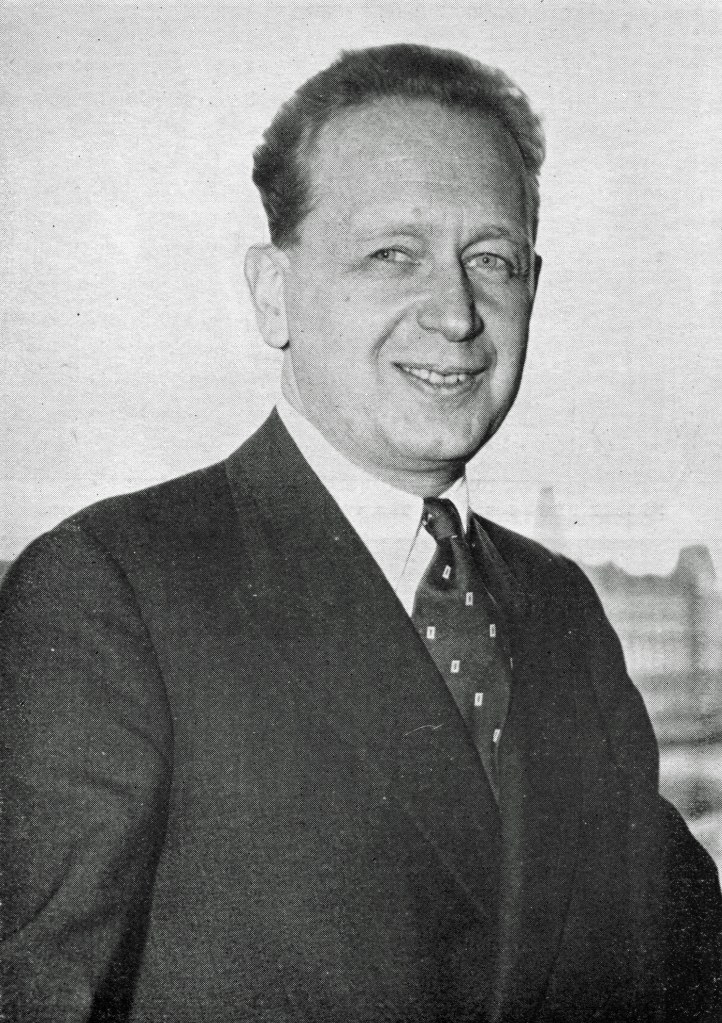
Dag Hammarskjöld, UN Secretary-General and Unitarian, who died on this day in 1961



 King Edward Street Chapel