Love has no cause; it is the astrolabe of God’s secrets.
Lover and Loving are inseparable and timeless.
Although I may try to describe Love when I experience it I am speechless.
Although I may try to write about Love I am rendered helpless; my pen breaks and the paper slips away at the ineffable place where Lover, Loving and Loved are one.
Every moment is made glorious by the light of Love.”
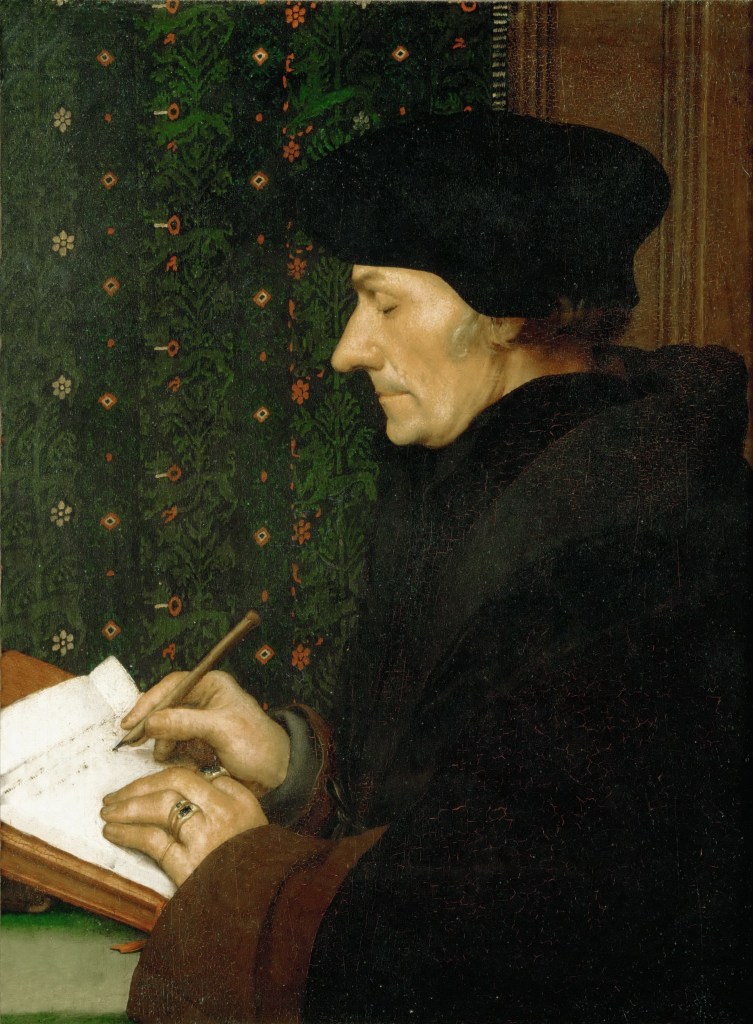
“The chief element of happiness is this: to want to be what you are.” Philosopher and theologian Desiderius Erasmus Roterodamus (commonly known as Erasmus), born on this day in 1466
From The Celtic Spirit: Daily Meditations for the Turning Year by Caitlin Matthews, “Unleashing Joy ‘He who binds to himself a joy Does a winged life destroy; But he who kisses the joy as it flies Lives in eternity’s sunrise.’ William Blake, Eternity Joy is not a creature of the cupboard; it is wild, free, and profligate, spending itself in one great burst of energy. The ability to enjoy and be part of something is a skill many of us lose; as we disengage from the immediacy of life, we are less able to sink ourselves deeply into things. This distancing of the self often arises from the need to protect ourselves from perceived dangers (physical and emotional). Whatever its cause, this form of separation from life clips the wings of joy very effectively. Certain people want to restrain the freedom of others; having hushed the ecstatic song of joy in their own lives as a thing too flighty or too dangerous to be allowed, they find it suspect in others as well. At the other extreme are people who, having tasted joy, want it all the time. Whatever our condition, how do we make access to joy? It can come only when there are three conditions present: a state of lively engagement with life, a receptive and spacious heart, and a respect for other beings than ourselves. If we live in a closed-off bubble, forcing life to happen beyond us, joy cannot enter; but if we play ball with life, catching and throwing back the many experiences that come our way, we begin our true engagement. If we have a daily receptive space where we allow the universe to speak to us, joy will find its way. If we truly believe that the freedom of other beings is as important as our own, if we truly respect that freedom, joy will wing toward us.”
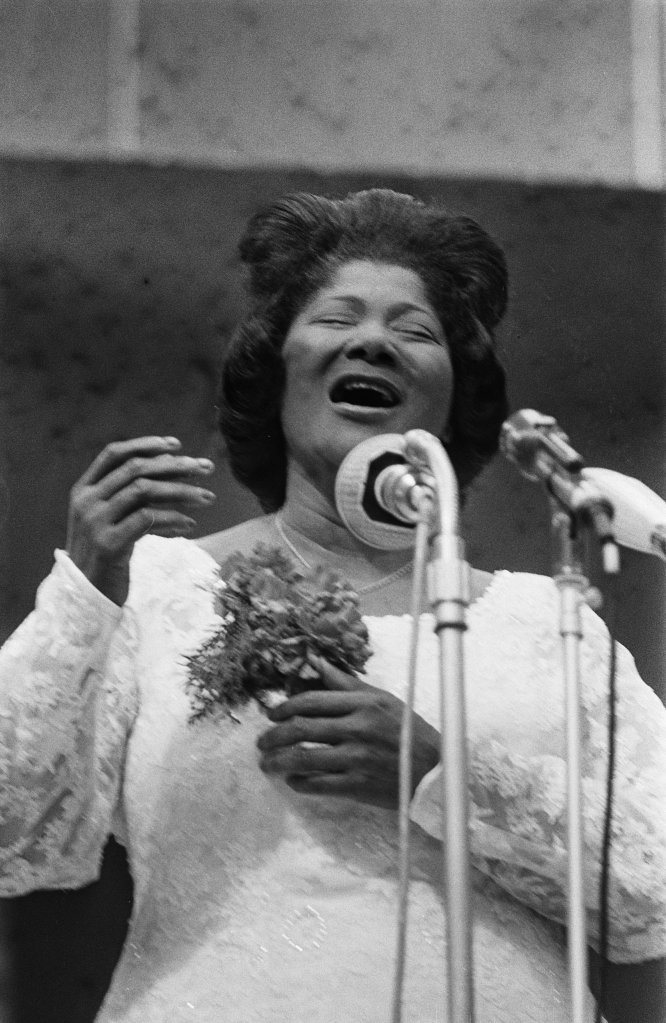
“How can you sing of Amazing Grace? How can you sing prayerfully of heaven and earth and all God’s wonders without using your hands? My hands, my feet, I throw my whole body to say all that is within me.” Mahalia Jackson, ‘Queen of Gospel’ singer (1911 – 1972), born on this day. It was Mahalia Jackson who sparked Martin Luther King Jr’s ‘I have a dream speech’ by calling out to him as he paused, “Tell them about the dream, Martin!” At this, Martin Luther King abandoned his notes and began to speak from the heart, delivering one of the most powerful speeches in human history. In a letter after the event he described her as “a blessing to me and a blessing to Negroes who have learned through her not to be ashamed of their heritage.”
“Men and boys are learning all kinds of trades – except how to make men of themselves. They learn to make houses; but they are not so well housed, they are not so contented in their houses, as the woodchucks in their holes. What is the use of a house if you haven’t got a tolerable planet to put it on?” Henry David Thoreau (1817 – 1862), Transcendentalist poet, philosopher, and naturalist, raised Unitarian
“Do you not know? Have you not heard? The Lord is God from old, Creator of the earth from end to end, He never grows faint or weary, His wisdom cannot be fathomed. He gives strength to the weary, fresh vigour to the spent. Youths may grow faint and weary, and young men stumble and fall; But they who trust in the Lord shall renew their strength; They shall mount up with wings like eagles, They shall run and not grow weary, They shall walk and not grow faint.” Isaiah 40:28-31
“A lot of people try to counteract the ‘I am not good enough’ with ‘I am good enough.’ In other words, they take the opposite and they try to invest it. That still keeps the world at the level of polarities. The art is to go behind the polarities. So the act is to go not to the world of ‘I am good’ to counteract ‘I am bad,’ or ‘I am lovable’ as opposed to ‘I am unlovable.’ But go behind it to the fact that I do crappy things and I do beautiful things and I am. That includes everything and I am.” Ram Dass
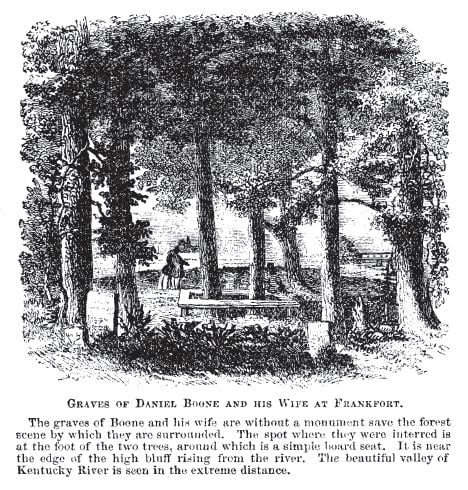
From Earth Bound: Daily Meditations for All Seasons by Brian Nelson, “On this day in 1734, Daniel Boone was born. John Mack Faragher’s biography of the woodsman describes how, in the early years of his marriage, Boone would disappear into the forest for long hunts, sometimes lasting a year or so. After one of these hunts, Boone returned to find a child born to his wife, a child fathered out of her loneliness and his absence. To his credit, Boone accepted the child as his own and she grew to be the most loyal of children. Hunting and trapping on the frontier, risky as it was, was probably easier for Boone than living in society. The call of the wild is powerful and ignored at one’s peril – yet those who turn to the wild to escape life’s complexities may find that their lives remain just as complicated upon their return. The wilderness is not an escape, but an inspiration that can make each day richer no matter where you are.”
“The happiness of life is made up of minute fractions – the little, soon forgotten charities of a kiss or a smile, a kind look or heartfelt compliment.” Samuel Taylor Coleridge, poet and one-time Unitarian minister, born on this day in 1772
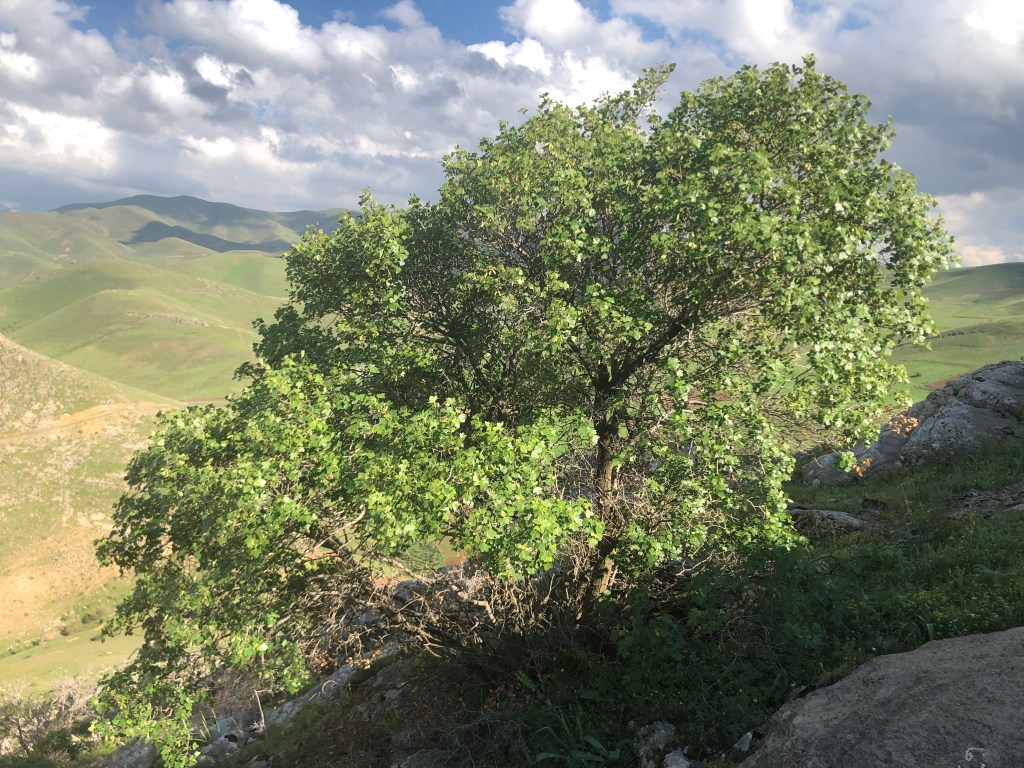
“It is better to guide one soul than to possess all that is on earth, for as long as that guided soul is under the shadow of the Tree of Divine Unity, he and the one who hath guided him will both be recipients of God’s tender mercy, whereas possession of earthly things will cease at the time of death. The path to guidance is one of love and compassion, not of force and coercion. This hath been God’s method in the past, and shall continue to be in the future!” The Báb (1819 – 1850), born on this day, forerunner of Baháʼu’lláh, the founder of the Baháʼí Faith






 King Edward Street Chapel